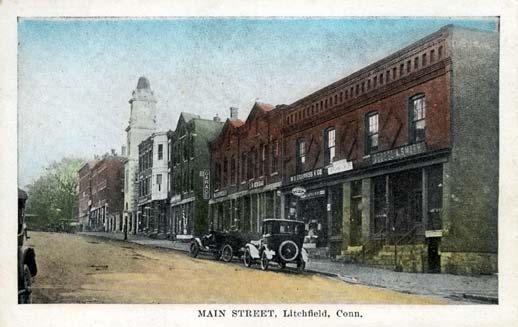
Revolutionary War Soldiers’ Tree

Rev war Tree 2

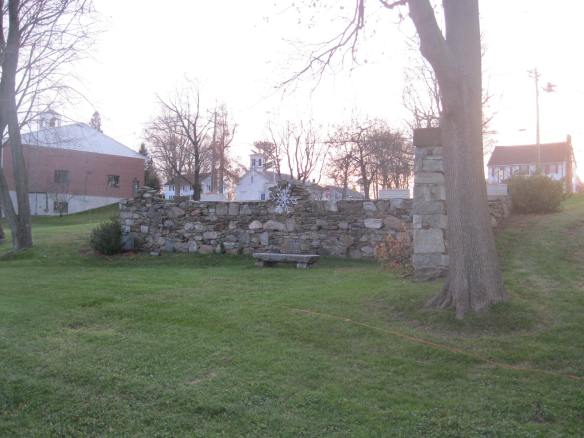
This small marker stands at the southeast corner of the eastern section of the Litchfield Green.

The first Arbor Day was held on April 10, 1872 and became an international event eleven years later when Birdsley Northrup of Kent, Connecticut, introduced the event to Japan.  However, Theodore Roosevelt’s ascendency to the presidency in 1901 and his emphasis on conservation issues sparked a nationwide surge of interest in Arbor Day.

In 1902 the Mary Floyd Tallmadge Chapter of the Daughters of the American Revolution celebrated the first Arbor Day of Roosevelt’s presidency by planting a tree on the Litchfield Green to commemorate the services of the town’s Revolutionary War soldiers.

Revolutionary War Soldiers

In all, 507 men from Litchfield served the Patriot cause between 1775 and 1783.  The first to serve were the men of the company led by David Welch of Milton, who were called up soon after news of Lexington and Concord arrived.  A second company enlisted in January 1776 to serve for the defense of New York City.  They drafted a contract specifying the terms of their service under Major General Charles Lee, stating that they were convinced of “the Necessity of a body of Forces to defend against certain Wicked Purposes formed by the instruments of Ministerial Tyranny.”  They specified, however, that they would not serve for more than eight weeks, and stated that General Lee had “given his Word and Honor” to uphold these terms.

fort washington

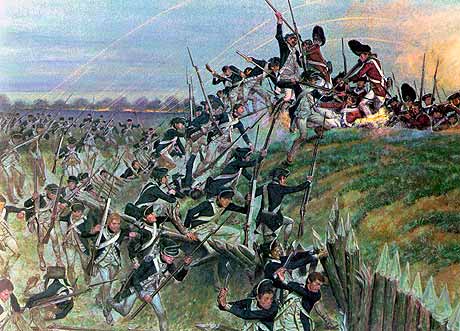
The Battle of Fort Washington

In November 1776 another company of Litchfield men under Captain Bezaleel Beebe set off for New York.  Thirty-six handpicked men of the company under Captain Beebe were sent to reinforce the American garrison at Fort Washington (today the Manhattan end of the George Washington Bridge).  The men marched into a trap, and were forced to surrender with the entire 2,600 man garrison of the fort.  Although the men were exchanged about a month later, only 11 of these men made it home to Litchfield.

In March 1777 a new call for troops went out, and Litchfield was tasked with enlisting 92 of its men.  The town voted to pay 12 pounds per year to each soldier and to supply “necessaries” to each soldier’s family.  A final call for troops reached town in 1781, and a “selective draft” took place, in which the town was divided into three classes and each class was expected to raise a certain number of men.

Interior of the Old Jersey Prison Ship

Interior of a British prison ship

In addition to those men who were killed and wounded in battle, twenty Litchfield men died while on the dreaded British prison ships.
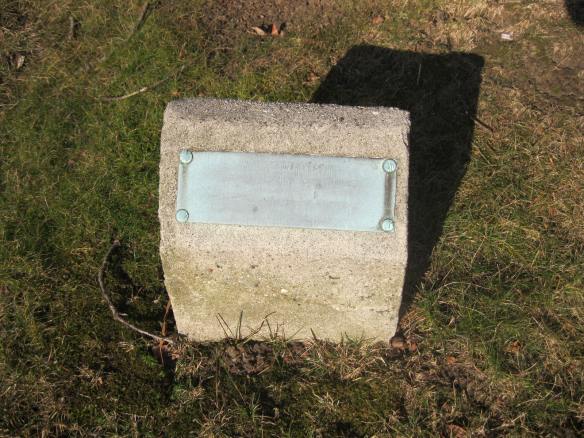
Rev War Tree

Today, a small stone marker stands at the foot of the tree dedicated to these soldiers.  Its faded inscription reads:

Planted in Memory of

Litchfield’s Revolutionary Soldiers

by the

Mary Floyd Tallmadge Chapter

DAR

Arbor Day 1902
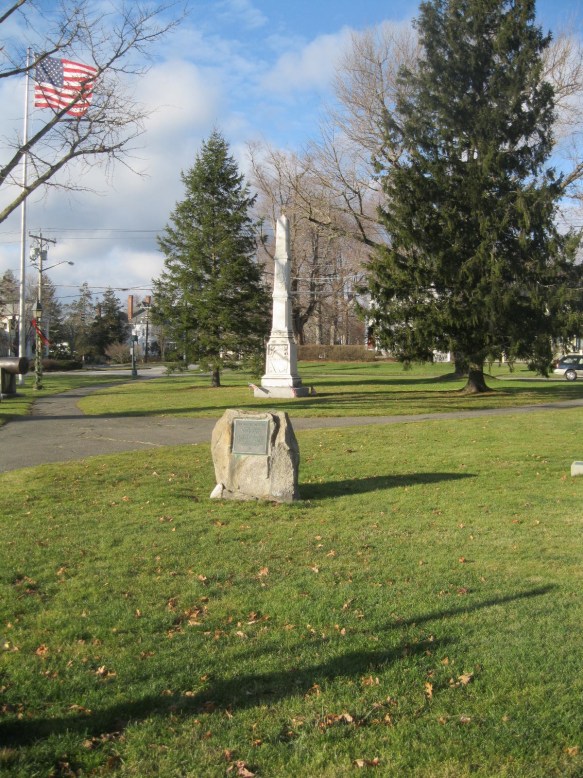
Litchfield’s National Historic Landmark Marker

Litch His D 3

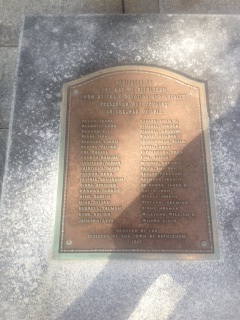
On the southeast corner of the middle section of the Litchfield Green stands a stone marker with an engraved bronze plaque.  It reads:

Litchfield Historic District

Has been designated a

Registered National

Historic Landmark

Under the provisions of the

Historic Sites Act of August 21, 1935

This site possesses exceptional value

In commemorating or illustrating

The history of the United States

United States Department of the Interior

National Park Servce

1968

The United States government maintains a National Register of Historic Places identifying structures or locales significant in our nation’s history.  There are more than 85,000 places on this list.  Of those, only 2,430 have been designated as National Historical Landmarks.  These sites have been so recognized because they have been identified as possessing national-level historic significance.  Applications for such designation must meet one of six criteria:

·  Sites where events of national historical significance occurred;

·  Places where prominent persons lived or worked;

·  Icons of ideals that shaped the nation;

·  Outstanding examples of design or construction;

·  Places characterizing a way of life; or

·  Archeological sites able to yield information.

Litch His D 1

In the application for designation as a National Historic Landmark in 1967, Charles W. Snell wrote that “Litchfield is probably New England’s finest surviving example of a typical late 18th century New England town.”  He especially tied the district’s significance to the fifteen frame houses from the late 1700s and the three from the period 1800-1828 that still stood in the center of town.

OLYMPUS DIGITAL CAMERA

Snell further established that several of these houses were designed by William Sprat, a British architect turned soldier who was captured at Saratoga and who, as a prisoner of war, was brought to Connecticut.  He remained in the state after the war, renewing his architectural career.  Sprat was well known for his Late Georgian style, typified in Litchfield by the Julius Deming house and the Sheldon Tavern.

LHD_Litchfield_Borough_Map_TownWebsite

The Litchfield Historic District is defined by the National Park Service as including the east and west sides of North and South Streets to the rear property line, running from Prospect Street on the north to Gallows Lane on the south.  It also includes the building fronting the northeast side of the green, those structures from the Congregational Church to North Street.  In total, the district comprises about 20 acres.

north street 1906

North Street 1906

Architectural features were not the only feature of the town that impressed the National Park Service, who in their designation noted “the great elms which now form a broad and beautiful archway over North and South street.”  Thanks in part to this designation, 21st century residents and visitors see parts of Litchfield through in much the same way as those who lived here two hundred years ago.

Connecticut Highway Department Markers

Connecticut Highway Department marker near the Gooseboro drive-in in Bantam.

Connecticut Highway Department marker near the Gooseboro drive-in in Bantam.

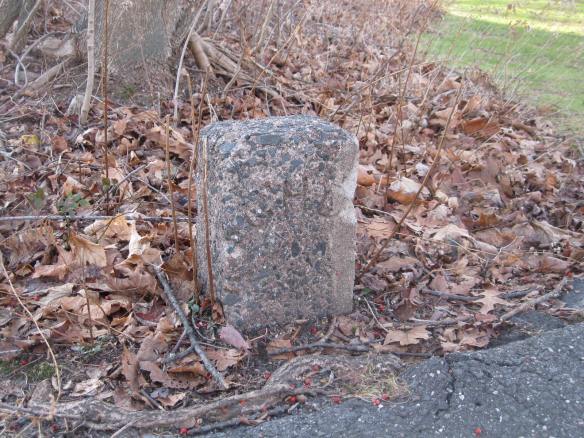
There are among the most ubiquitous markers on our man-made landscape.  Usually between twelve and eighteen inches high, they are simple stone blocks engraved with the initials “CHD.”

A Connecticut Highway Department marker alongside Route 4 by the Torrington Country Club,

A Connecticut Highway Department marker alongside Route 4 by the Torrington Country Club,

“CHD” stands for the Connecticut Highway Department, a state agency that was incorporated into the Department of Transportation in 1969.  At one time, however, it was responsible for the construction and maintenance of all state roads.

CHD South Street 2

A Connecticut Highway Department marker abuts the sidewalk on the west side of South Street in Litchfield.

The Connecticut Highway Department began preparing highway boundary maps in 1926; much of the work was completed by the Works Progress Administartion during the Great Depression.  These maps were done in accordance with a statue passed in 1925 that required that the “Highway Commissioner … mark such boundary limits by a uniform and distinctive type of marker.”  The stone “CHD” markers satisfy this requirement.

CHD Litch Green 2

Three Connecticut Highway Markers denote the right of way to widen the turn along the northeast corner between the middle and eastern sections of the Litchfield Green. One marker is visible at the extreme right of the photo; a second is partially hidden by the tree at the front right; the third is visible between the telephone pole and tree in the background.

The highway department was originally created specifically to build highways.  By 1923, however, its tasks had expanded to eliminating dangerous conditions on roads, improving the roadsides, installing proper warning signs, removing snow and ice from the highways, and – pertinent to these markers – establishing boundary lines alongside the highways and securing the rights of way for the purpose of widening and straightening roads.

To oversee these last two tasks, the Connecticut Highway Department created the Bureau of Highway Boundaries and Rights of Way.  The bureau had three major tasks:  land titles, boundary surveys, and right of way purchases.  When it was determined that a new road needed to be built, the bureau conducted a title search, acquired the property and was charged with “properly marking the boundaries of all state roads” (Forty Years of Highway Development in Connecticut, 16).  The result of this, of course, are the thousands of stone markers that dot Connecticut roadsides.

The stone “CHD” markers have interesting stories to tell to those explorers willing to look into them.  The “CHD” marker above is on Prospect Street, a town road, not a state road,  However, a look at an old map shows that this was once the site of “Wolcott Road.”  While this road was subsequently closed, the right-of-way is still maintained by the state.

These stone markers are a thing of the past, however.  Today, the Connecticut Department of Transportation marks its property flush to the ground, with bronze discs engraved with “CTDOT.”

Hidden Nearby: Goshen’s Animal Pound

Pound1

The History of Litchfield County, published in 1881 by the J.W. Lewis Company in Philadelphia, suggests that North Goshen was once a thriving community.  The book offers a house-by-house guide of the area, describing the residents and their commercial and religious activities.

Pound sign

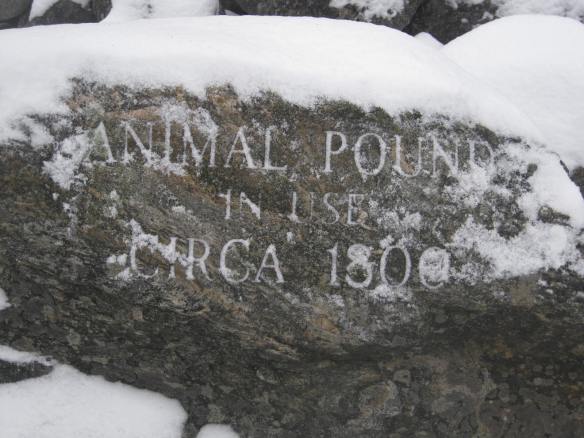
Today, nearly all vestiges of the community are gone, the land owned by the Torrington Water Company.  There are a few hints remaining, however, to the history of this area.  Along East Street North stands an animal pound, a sign suggesting that it was built “circa 1800.”

cattle

Animal pounds were a common sight in early America, as livestock often roamed free.  In fact, at the meetings that established the town of Goshen in 1739, the residents appointed three horse branders whose task was to apply a distinctive mark to each resident’s animals.  That year, 66 distinct marks were recorded in Goshen.

At that same meeting, two men were given permission to build town pounds.  Livestock, by town ordinance, could roam free from March to November.  However, those not in their owner’s barns by November would be impounded and cared for by the town’s pound keeper.  When the owner arrived at the pound to claim his animal, he would pay a fee to the keeper.  Town records in Goshen also indicate that those delinquent in paying their taxes could work off their debt by supervising the town pounds.

Pound 2

The walls of the pound had to be wide enough so that an animal couldn’t step over them.

As part of Goshen’s 250th anniversary in 1989, the Torrington Water Company restored this pound.  Its walls are 35 feet long and 25 feet wide, and stand 4 feet high.

Structures like the Goshen animal pound offer the 21st century explorer a glimpse of life nearly three centuries ago, and remind us of the centrality of livestock to the daily existence of those who inhabited Litchfield County.

The Windmill Hill Windmill

Cistern and Windmill

We take to the woods for many reasons.  Thoreau famously wrote, “I went to the woods because I wished to live deliberately, to front only the essential facts of life, and see if I could not learn what it had to teach, and not, when I came to die, discover that I had not lived.”  Most of us take to the woods for less philosophical reasons – to hike, run, snowshoe, mountain bike, or bird watch.  Hidden amongst the Litchfield woods, however, are reminders of the way the land was used in the past.

There is little old growth forest left in Litchfield County.  In the southern environs of the county the land was cleared for farms.  In its northern reaches, Litchfield County’s woods were utilized for the charcoal needed to power iron furnaces.  When these industries began to transform or fade away, the forests reclaimed their original territory, engulfing many man-made objects and alterations to the landscape.

Perhaps this is most true of the White Memorial Foundation, which owns approximately 5,000 acres in Litchfield and Morris.  In these woods remain many implements of the county’s agricultural and industrial past.

bw windmill

The windmill and cistern on Windmill Hill, White Memorial. From Rachel Carley, Litchfield, pg. 212.

One fascinating example is the base on which the White family’s windmill once stood.  The explorer can find it on the appropriately named Windmill Hill, very near the White Memorial visitor center and museum.  The proximity is no coincidence.

John Jay White, whose children established the foundation in the early 1900s, was a New York real estate magnate who moved from 5th Avenue to Litchfield in 1863.  The home he built, Whitehall, in many ways epitomized the Victorian architectural fashion popular at the time.

View of Whitehall

The view toward Whitehall from the site of the windmill.

On the top of a nearby hill White had a cistern built.  A nearby windmill pumped water into the covered cistern.  Pipes then brought the water more than a quarter mile to the house, which thus enjoyed natural water pressure.

windmill

This structure stands on the approximate site of the windmill.

Today, a concrete slab marks the site of the cistern.  A concrete structure stands nearby; it was built to house the electric pump that replaced the windmill but was rendered obsolete a number of years ago when a new well was dug.

carriage house

White Memorial’s carriage house.

Whitehall still stands, albeit in modified form, as the visitor center and museum of the White Memorial Foundation.  Its top floor was removed and modifications made that erased the structure’s Victorian elements.  Only in the carriage house are glimpses of the Victorian splendor that once marked the estate evident.

Hidden Nearby: The Morris Academy

Morris monument

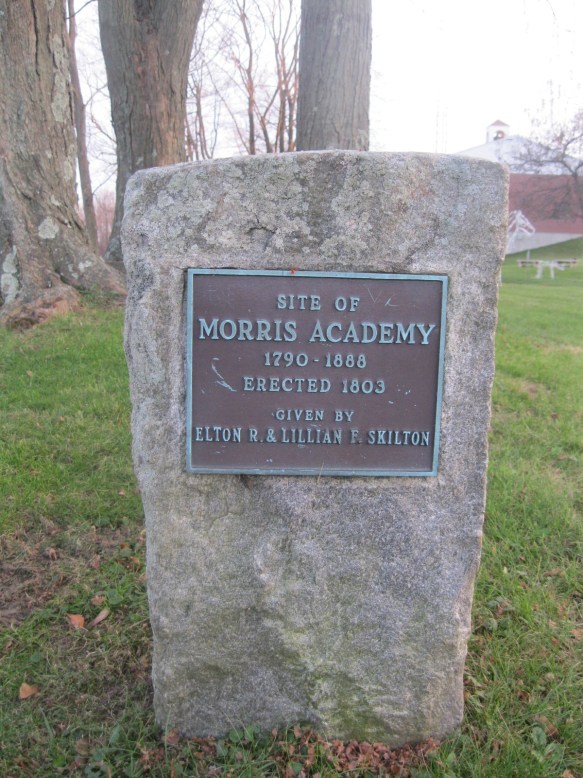
This small marker and the remnants of the foundation mark the location of the Morris Academy, a landmark co-educational institution.

James Morris

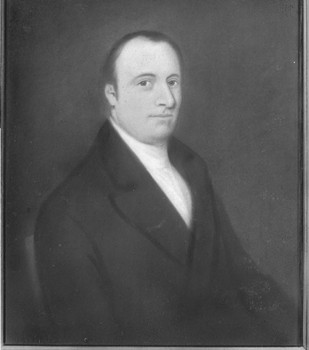
The Academy was the brainchild of James Morris III, who was born on January 19, 1752 in South Farms (which, in 1859 was renamed Morris in his honor).  Morris’ father James was a deacon, and the son harbored hopes of entering the ministry.  An enthusiastic reader, young James routinely traveled to Bethlehem to borrow books from that town’s library.  His education, which began with these library books, was guided by three remarkable teachers.

Nathan Hale

At eighteen, Morris began studies under Bethlehem’s Dr. Joseph Bellamy, one of the leading theologians of the late 18th century.  It is reported that Morris also studied under Nathan Hale, before enrolling at Yale.  While at Yale, Timothy Dwight, later president of the university and one of the leading figures in American educational history, served as Morris’ tutor.

The Battle of Yorktown

Following his graduation, Morris returned home to help on the family farm, teach students in Litchfield, and ponder a future in the ministry.  The Revolutionary War, however, got in the way.  He served first in the Connecticut Militia, then in the Continental Army, fighting on Long Island, at White Plains, and at Germantown, Pennsylvania, where he was captured.  Upon receiving parole, he hurried to Yorktown, Virginia, where he served Alexander Hamilton during that climactic battle of the Revolution.

After the war he returned home and married Elizabeth Hubbard, with whom he raised five children.  His fellow townspeople elected him both justice of the peace and a selectman.  By 1790, however, when children began regularly showing up at his door, Morris put aside his ideas about the ministry and looked instead for a career in education.

A typical scene in an early co-educational school

Rare for his time, Morris accepted both boys and girls as students.  This sparked significant discussion, as many believed that education would cause women to lose sight of their more traditional roles.  In 1794, a town hearing was held about the situation, and any charges against Morris were dismissed.

The foundation of the Morris Academy

The foundation of the Morris Academy

By 1800, Morris’ school had grown so large that a formal structure was needed.  Wealthy subscribers were enlisted from the area to subsidize the $1,200 cost of the building, which opened on November 28, 1803.  (The building stood on the property where the James Morris School stands today)  By that time, Morris had educated students from all of the New England states except Rhode Island, as well as New York, New Jersey, Pennsylvania, Maryland, Virginia, South Carolina, Georgia and the West Indies.  He averaged between 50 and 75 students a year.

While Morris died in Goshen in 1820 (he is buried in East Morris), the school remained open until 1888.  As Barbara Nolen Strong wrote in her 1976 book on the Morris Academy, “The Morris Academy is entitled to be called a pioneer institution because of its ‘open door’ policy in coeducation. It was not the first in the United States, not even in Connecticut, but none of the other early academies opened their doors as wide and kept them open as long. No other coeducational academy spread its influence so far.” In a fitting gesture to the impact of James Morris on the community, the town of South Farms changed its name to Morris in 1859.

A Christmas Treasure in Bethlehem

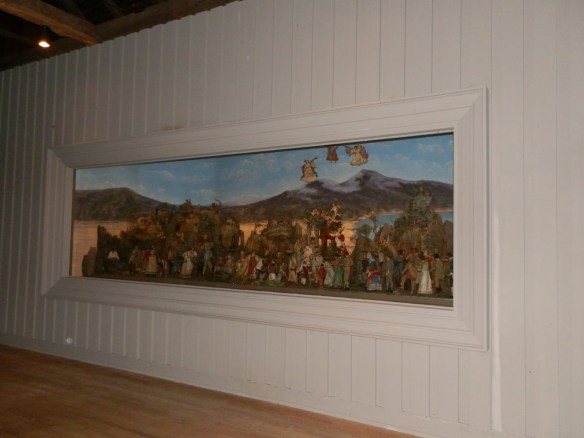
18th-century Neapolitan Crèche at the Abbey of Regina Laudis in Bethlehem, CT

Situated in what appears to be a typical Connecticut rustic barn along Flanders Road in Bethlehem is a holiday and artistic treasure.

3148868707_c3c421dc1e_z

Victor Amadeus II was crowned king of Sardinia in 1720.  As a coronation gift, he was presented with a Neapolitan crèche, consisting of 68 figures made of wood, terra cotta, porcelain, and jute.  They represent the Christ child, Mary and Joseph, shepherds, the three kings, and Italian villagers.  Their village is made from the bark of cork trees, and gives insight into the activities of those who lived along the Italian coast in the 18th century.

pictur2

Following the king’s death in 1732, the crèche was obtained by an Italian noble family, and it made its way to the United States in 1948.  The Abbey  of Regina Laudis was established the previous year, born out of the destruction of World War II.  Mother Benedict Dunn was born Vera Duss in the United States, but lived much of her early life in France.  She spent most of the war in the bell tower of the Abbey of Notre Dame de Jouarre, from which she watched the advance of George Patton’s liberating United States Third Army.  The kindness and sacrifice of the soldiers led Mother Benedict to establish a foundation in the United States.  The nuns were welcomed to Bethlehem by the artist Lauren Ford, who opened her home to the order until they could find a place of their own.  A local industrialist named Robert Leather donated the 400 acres that today comprise the Abbey.  The crèche was a gift of Loretta Hines Howard, who presented it to the Abbey in 1949, in memory of her husband.

P6060753

Several years later, Mrs. Howard donated a similar crèche to the Metropolitan Museum of arts, where it graces their Christmas decorations every December.  The Metropolitan’s curatorial staff was instrumental in the three-year restoration process the Regina Laudis crèche underwent from 2005 to 2008.  The crèche returned to Bethlehem for Christmas 2008 after the figures had been cleaned and repaired, the original 1720 costumes being hand stitched.

DSC_6832

The barn, which itself dates to the 18th century and once belonged to famed local minister Joseph Bellamy, was outfitted with climate control technology to ensure the preservation of the pieces.

To all of those who have taken the time to stop by this blog, a very happy holiday season!

The Intersection of North and South Streets

A common theme of this blog has been that we can learn a lot more about our historical landscape by getting out of our cars and taking the time to explore our surroundings.  Some things, however, are eminently clear even from behind the wheel of a car.  Most of those reading this post have sat at the red light at the intersection of routes 63 and 202, looking to proceed from North Street to South Street.  It is clear to all motorists that to do so requires a left turn on to West Street, then a right turn on to South Street.  Why are North and South Street not aligned?

An 1814 map of Litchfield, showing the alignment of North and South Streets. From Rachel Carley, Litchfield: The Making of a New England Town

North and South Streets are among the oldest streets in town, and historian Rachel Carley reports that landscaping of these streets began as early as 1771.  An 1814 map records these streets as being “very wide”, while another source states that the streets resembled “long pastures.”  At town meetings in 1771 and 1785, it was decided to straighten North and South Streets.

Nathaniel Hawthorne

Nathaniel Hawthorne visited Litchfield in 1838, and marveled at the width of the streets, and the islands of grass that divided the thoroughfares.  He wrote that “nothing can be neater than the churches and houses” along the two streets.

An alder swamp

This was, however, not always the case.  Alain White, in his history of Litchfield, states that the likely reason for the wide streets was “more for the convenience of the cattle than the delight of residents and strangers.”  White further reports that the awkward alignment of North and South Streets may have been due to an alder swamp along the west side of South Street, which forced that street to be moved a few yards to the east.    However, White also recounts that the zig-zag of the two streets might have been due to the presence of a stately oak, “so beautiful that the settlers laid out North Street … to the west to avoid having to cut it.”  There is a third possibility.  The paths of the two streets follows the crest of the ridge on which they were built.  This was likely the route of the earliest footpaths in town, and it simply may have been more convenient to blaze the roads along the same lines.

There is one other interesting note about the layout of North and South Streets.  It was common in colonial New England town to lay out the streets on the lines of the cardinal directions.  Litchfield is unique only in that those streets – North, South, East, West – have retained their directional names.  However, North Street is not aligned to 0 degrees, but rather to 13 degrees.  This is a result both of the original layout of the street – it was, for whatever reason, not aligned to true north – as well as the fact that magnetic north has moved approximately five degrees to the northeast since they town was laid out in the early 1700s.

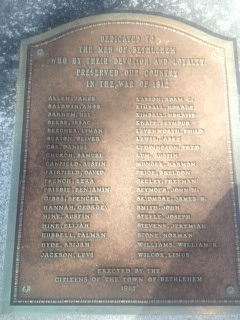
Hidden Nearby: Bethlehem’s War of 1812 Monument

Most New England towns have a monument to their Civil War veterans.  Many also honor their sons who fought in World War I, World War II, Korea and Vietnam.  Bethlehem, Connecticut, is one of the few towns to honor its War or 1812 veterans.

This year marks the bicentennial of the War of 1812.  While the anniversary has been largely overshadowed by the Civil War sesquicentennial, the War of 1812 was an important event in the history of the young American republic.  For the second time in 35 years Americans had stood up to the British, the world’s great power, and had held their own.  The end of the war, followed by the American success at the Battle of New Orleans (word of the treaty reached Louisiana too late to prevent the battle) led to a surge in American nationalism and a spirit of political unity known as the Era of Good Feelings.

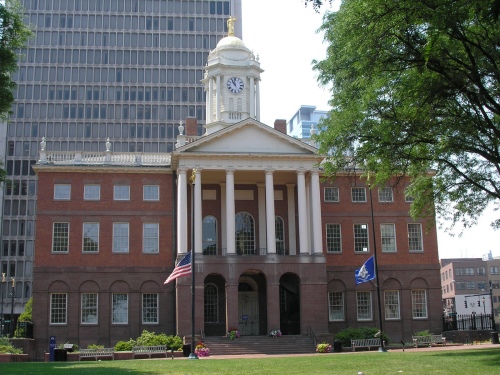
The Old State House, site of the Hartford Convention, 1814-15

Still, the war was quite unpopular in Connecticut.  As much of the state’s economy was tied to trade with Great Britain, the state suffered financially from the decision to go to war.  Connecticut’s entire Congressional delegation voted against the war.  Many of Connecticut’s Federalist politicians supported the call for the Hartford Convention, an assembly of leading New Englanders concerned, among other things, with ending the war.  Seven Connecticut representatives, including Nathaniel Smith of nearby Woodbury, attended the Convention, where calls were made for the secession of New England states from the Union.  The end of the war and the results from New Orleans made fools of these men, most of whom saw their political careers ruined.

Residents of Stonington work on fortifications for their town, 1814.

Connecticut’s opposition to the war was manifested in other ways, as well.  While some 10,000 Connecticut men turned out for the war, the state government refused to allow the members of the Connecticut militia to leave the state.  There was little military action in the state.  An contingent of ships was trapped by the British at New London, but the appearance of a large group of state militia allowed the American sailors to escape.  In 1814, a British fleet bombarded Stonington for three days, while $200,000 worth of damage was done to shipping concerns at Essex.

With hindsight, we know that the war had a minimal impact on Litchfield County.  Statewide, there were 233 casualties as a result of the war.  Few families of Litchfield would have felt the effects of the war.  Still, the men of Bethlehem who enlisted to serve knew none of this.  They joined the war effort with the belief that they would be thrust into action against the British, and were willing to make this sacrifice.  It is this patriotic spirit that the town of Bethlehem commemorated with this monument.

Gallows Lane and the Execution of Barnett Davenport

Street names are often guides to a town’s past.  In Litchfield’s case, this is perhaps most graphically illustrated with Gallows Lane.

Most town residents have heard the story that the street got its name because executions once took place there.  The historian – trained to be a skeptic – questions this piece of lore.

But it’s true.  And the story reveals crimes of a bloody nature we don’t often associate with our forefathers.

Barnett Davenport was born in the Merryall section of New Milford in 1760.  At 16 he joined the Continental Army to fight in the American Revolution.  He served under George Washington, and was at Valley Forge, Fort Ticonderoga, and Monmouth Court House.  He had always been a troubled youth and was a convicted horse thief.  Perhaps because of his demons, or because he had simply had enough of war, Davenport deserted and returned home.

Early American grist mill

He took a job with Caleb Mallory, a farmer who operated a grist mill along what is now Route 109 in Washington.  Mallory and his wife Jane had two daughters who lived in the area.  One of the daughters had three children – a daughter Charlotte, 9, and sons John and Sherman, 6 and 4.  In February 1780, Davenport convinced Caleb’s two daughters to go on a trip.  With the two away from the house, Davenport entered the home on the night of February 3rd, and beat Caleb, Jane and Charlotte to death.  Looting the house of its valuables, he set it ablaze as he left, killing John and Sherman.

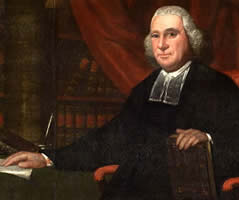
Reverend Judah Champion

Davenport escaped on foot and hid out in a cave in Cornwall for six days.  Captured, he was brought to Litchfield where he was arraigned and gave a full confession, likely to Reverend Judah Champion of Litchfield’s Congregational Church.  The confession remains in the archives at the University of Virginia.

Roger Sherman

He was put on trial, which was presided over by Roger Sherman, who previously had served on the committee that wrote the Declaration of Independence.  Sherman sentenced Davenport to forty lashes and then to be hanged.  The execution took place at Gallows Hill on May 8, 1780.  In 1768, a Native American named John Jacob had been hanged there for the murder of another American Indian.  In 1785, Thomas Goss of Barkhamsted was also hanged on the hill, for the murder of his wife.

Davenport would likely have been led in a procession from the Litchfield jail to the site of the gallows.  It was quite common in early America for large crowds to turn out for an execution, as it was considered an opportunity for moral instruction for children.  The sheriff would read the sentence to the condemned, who would be hooded and mounted on the stand.  A minister would give a sermon.  With the noose placed around Davenport’s head, the trap door was sprung.  The body would be left hanging for some time, a reminder to passersby of the dangers of immorality.

Gallows Hill, frightening now only to Litchfield runners, was once a site terrifying to the condemned.

Gallows Lane was once called Middle Street and at 28 rods (154 feet) was the widest in Litchfield.  Like many other streets, its name speaks to a dramatic past.

For more information on Barnett Davenport, see a Danbury News-Times article on the excellent work of a New Milford historian:  http://www.newstimes.com/local/article/New-Milford-historian-unearths-account-of-984284.php