Revolutionary War Soldiers’ Tree

Rev war Tree 2

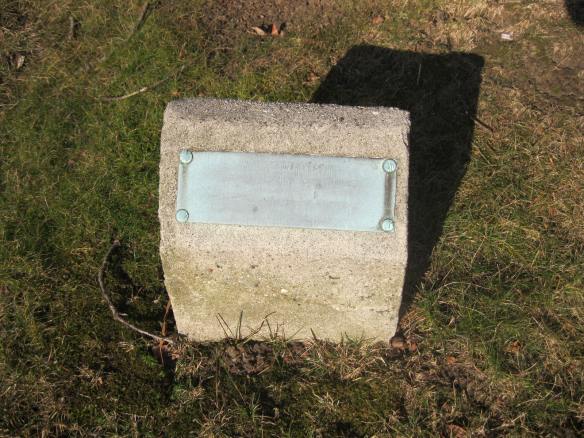
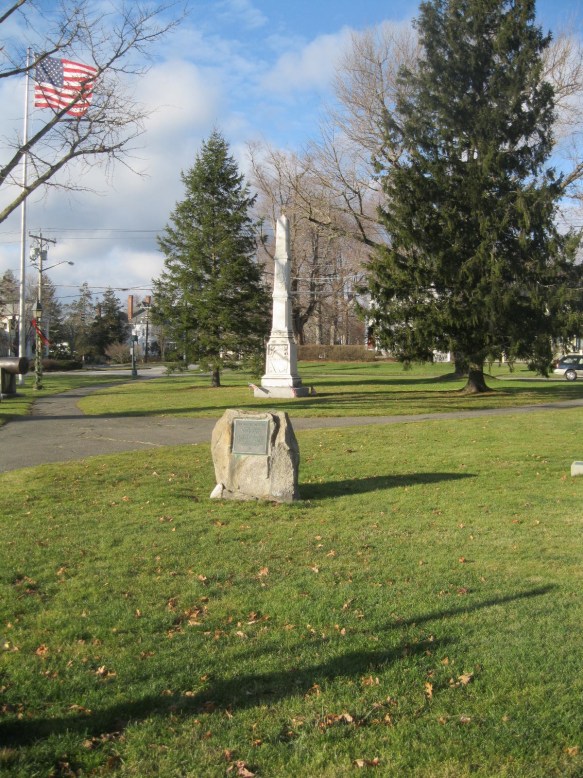
This small marker stands at the southeast corner of the eastern section of the Litchfield Green.

The first Arbor Day was held on April 10, 1872 and became an international event eleven years later when Birdsley Northrup of Kent, Connecticut, introduced the event to Japan.  However, Theodore Roosevelt’s ascendency to the presidency in 1901 and his emphasis on conservation issues sparked a nationwide surge of interest in Arbor Day.

In 1902 the Mary Floyd Tallmadge Chapter of the Daughters of the American Revolution celebrated the first Arbor Day of Roosevelt’s presidency by planting a tree on the Litchfield Green to commemorate the services of the town’s Revolutionary War soldiers.

Revolutionary War Soldiers

In all, 507 men from Litchfield served the Patriot cause between 1775 and 1783.  The first to serve were the men of the company led by David Welch of Milton, who were called up soon after news of Lexington and Concord arrived.  A second company enlisted in January 1776 to serve for the defense of New York City.  They drafted a contract specifying the terms of their service under Major General Charles Lee, stating that they were convinced of “the Necessity of a body of Forces to defend against certain Wicked Purposes formed by the instruments of Ministerial Tyranny.”  They specified, however, that they would not serve for more than eight weeks, and stated that General Lee had “given his Word and Honor” to uphold these terms.

fort washington

The Battle of Fort Washington

In November 1776 another company of Litchfield men under Captain Bezaleel Beebe set off for New York.  Thirty-six handpicked men of the company under Captain Beebe were sent to reinforce the American garrison at Fort Washington (today the Manhattan end of the George Washington Bridge).  The men marched into a trap, and were forced to surrender with the entire 2,600 man garrison of the fort.  Although the men were exchanged about a month later, only 11 of these men made it home to Litchfield.

In March 1777 a new call for troops went out, and Litchfield was tasked with enlisting 92 of its men.  The town voted to pay 12 pounds per year to each soldier and to supply “necessaries” to each soldier’s family.  A final call for troops reached town in 1781, and a “selective draft” took place, in which the town was divided into three classes and each class was expected to raise a certain number of men.

Interior of the Old Jersey Prison Ship

Interior of a British prison ship

In addition to those men who were killed and wounded in battle, twenty Litchfield men died while on the dreaded British prison ships.
Rev War Tree

Today, a small stone marker stands at the foot of the tree dedicated to these soldiers.  Its faded inscription reads:

Planted in Memory of

Litchfield’s Revolutionary Soldiers

by the

Mary Floyd Tallmadge Chapter

DAR

Arbor Day 1902
Litchfield’s National Historic Landmark Marker

Litch His D 3

On the southeast corner of the middle section of the Litchfield Green stands a stone marker with an engraved bronze plaque.  It reads:

Litchfield Historic District

Has been designated a

Registered National

Historic Landmark

Under the provisions of the

Historic Sites Act of August 21, 1935

This site possesses exceptional value

In commemorating or illustrating

The history of the United States

United States Department of the Interior

National Park Servce

1968

The United States government maintains a National Register of Historic Places identifying structures or locales significant in our nation’s history.  There are more than 85,000 places on this list.  Of those, only 2,430 have been designated as National Historical Landmarks.  These sites have been so recognized because they have been identified as possessing national-level historic significance.  Applications for such designation must meet one of six criteria:

·  Sites where events of national historical significance occurred;

·  Places where prominent persons lived or worked;

·  Icons of ideals that shaped the nation;

·  Outstanding examples of design or construction;

·  Places characterizing a way of life; or

·  Archeological sites able to yield information.

Litch His D 1

In the application for designation as a National Historic Landmark in 1967, Charles W. Snell wrote that “Litchfield is probably New England’s finest surviving example of a typical late 18th century New England town.”  He especially tied the district’s significance to the fifteen frame houses from the late 1700s and the three from the period 1800-1828 that still stood in the center of town.

OLYMPUS DIGITAL CAMERA

Snell further established that several of these houses were designed by William Sprat, a British architect turned soldier who was captured at Saratoga and who, as a prisoner of war, was brought to Connecticut.  He remained in the state after the war, renewing his architectural career.  Sprat was well known for his Late Georgian style, typified in Litchfield by the Julius Deming house and the Sheldon Tavern.

LHD_Litchfield_Borough_Map_TownWebsite

The Litchfield Historic District is defined by the National Park Service as including the east and west sides of North and South Streets to the rear property line, running from Prospect Street on the north to Gallows Lane on the south.  It also includes the building fronting the northeast side of the green, those structures from the Congregational Church to North Street.  In total, the district comprises about 20 acres.

north street 1906

North Street 1906

Architectural features were not the only feature of the town that impressed the National Park Service, who in their designation noted “the great elms which now form a broad and beautiful archway over North and South street.”  Thanks in part to this designation, 21st century residents and visitors see parts of Litchfield through in much the same way as those who lived here two hundred years ago.

Connecticut Highway Department Markers

Connecticut Highway Department marker near the Gooseboro drive-in in Bantam.

Connecticut Highway Department marker near the Gooseboro drive-in in Bantam.

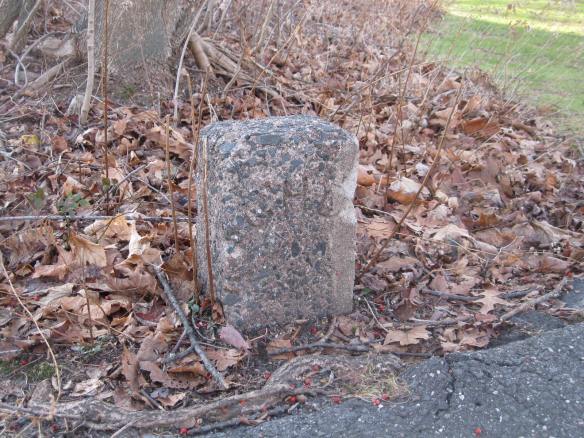
There are among the most ubiquitous markers on our man-made landscape.  Usually between twelve and eighteen inches high, they are simple stone blocks engraved with the initials “CHD.”

A Connecticut Highway Department marker alongside Route 4 by the Torrington Country Club,

A Connecticut Highway Department marker alongside Route 4 by the Torrington Country Club,

“CHD” stands for the Connecticut Highway Department, a state agency that was incorporated into the Department of Transportation in 1969.  At one time, however, it was responsible for the construction and maintenance of all state roads.

CHD South Street 2

A Connecticut Highway Department marker abuts the sidewalk on the west side of South Street in Litchfield.

The Connecticut Highway Department began preparing highway boundary maps in 1926; much of the work was completed by the Works Progress Administartion during the Great Depression.  These maps were done in accordance with a statue passed in 1925 that required that the “Highway Commissioner … mark such boundary limits by a uniform and distinctive type of marker.”  The stone “CHD” markers satisfy this requirement.

CHD Litch Green 2

Three Connecticut Highway Markers denote the right of way to widen the turn along the northeast corner between the middle and eastern sections of the Litchfield Green. One marker is visible at the extreme right of the photo; a second is partially hidden by the tree at the front right; the third is visible between the telephone pole and tree in the background.

The highway department was originally created specifically to build highways.  By 1923, however, its tasks had expanded to eliminating dangerous conditions on roads, improving the roadsides, installing proper warning signs, removing snow and ice from the highways, and – pertinent to these markers – establishing boundary lines alongside the highways and securing the rights of way for the purpose of widening and straightening roads.

To oversee these last two tasks, the Connecticut Highway Department created the Bureau of Highway Boundaries and Rights of Way.  The bureau had three major tasks:  land titles, boundary surveys, and right of way purchases.  When it was determined that a new road needed to be built, the bureau conducted a title search, acquired the property and was charged with “properly marking the boundaries of all state roads” (Forty Years of Highway Development in Connecticut, 16).  The result of this, of course, are the thousands of stone markers that dot Connecticut roadsides.

The stone “CHD” markers have interesting stories to tell to those explorers willing to look into them.  The “CHD” marker above is on Prospect Street, a town road, not a state road,  However, a look at an old map shows that this was once the site of “Wolcott Road.”  While this road was subsequently closed, the right-of-way is still maintained by the state.

These stone markers are a thing of the past, however.  Today, the Connecticut Department of Transportation marks its property flush to the ground, with bronze discs engraved with “CTDOT.”

Hidden Nearby: Goshen’s Animal Pound

Pound1

The History of Litchfield County, published in 1881 by the J.W. Lewis Company in Philadelphia, suggests that North Goshen was once a thriving community.  The book offers a house-by-house guide of the area, describing the residents and their commercial and religious activities.

Pound sign

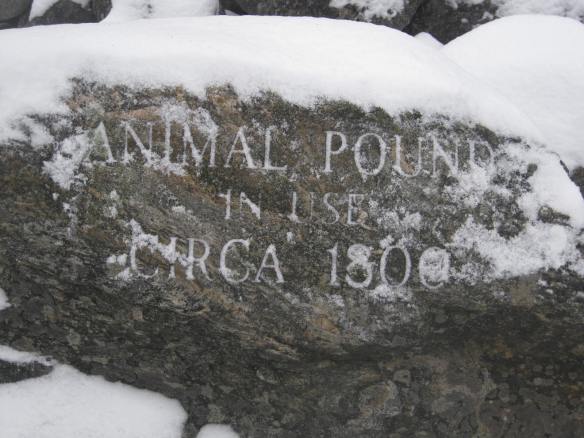
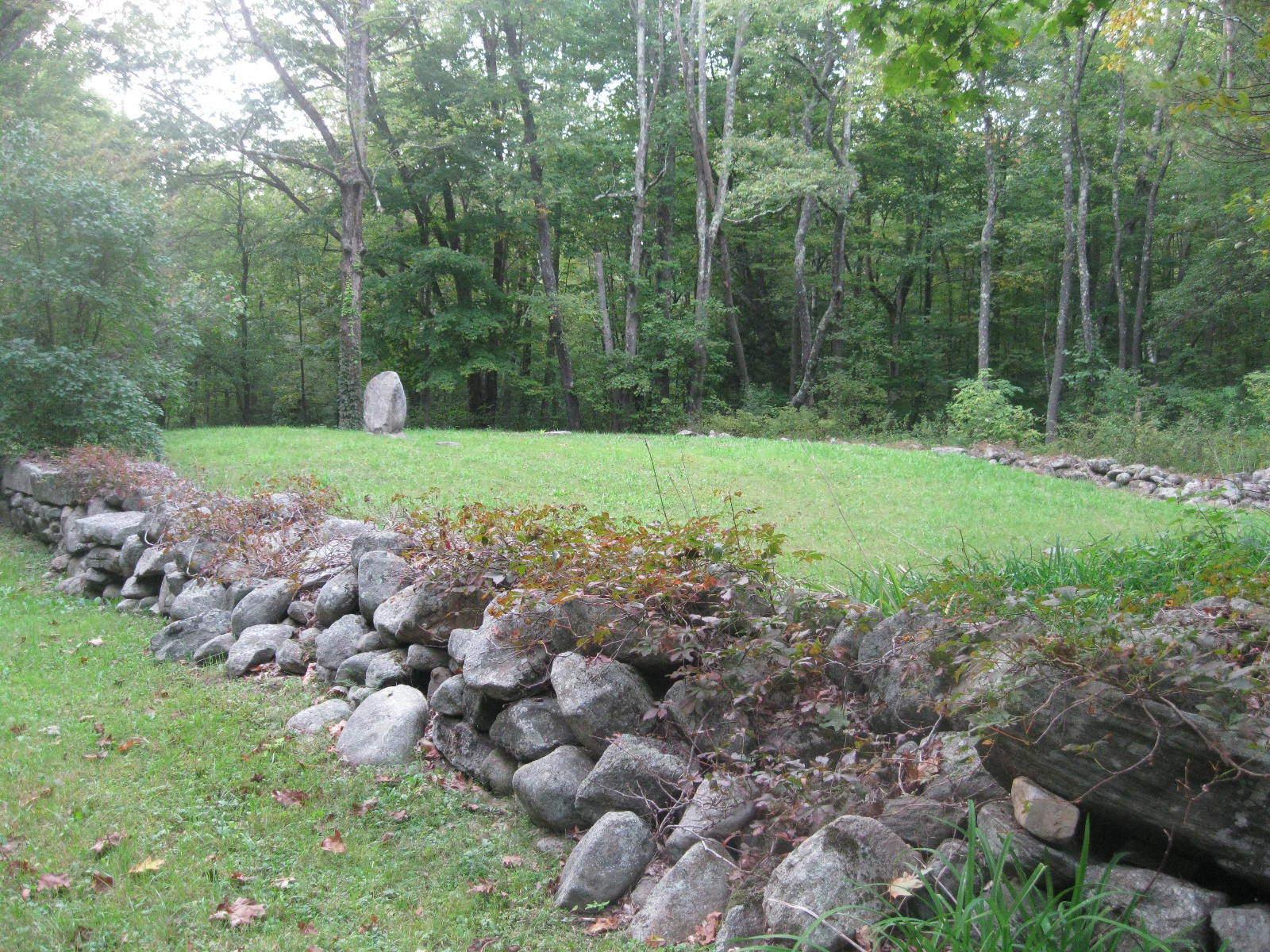
Today, nearly all vestiges of the community are gone, the land owned by the Torrington Water Company.  There are a few hints remaining, however, to the history of this area.  Along East Street North stands an animal pound, a sign suggesting that it was built “circa 1800.”

cattle

Animal pounds were a common sight in early America, as livestock often roamed free.  In fact, at the meetings that established the town of Goshen in 1739, the residents appointed three horse branders whose task was to apply a distinctive mark to each resident’s animals.  That year, 66 distinct marks were recorded in Goshen.

At that same meeting, two men were given permission to build town pounds.  Livestock, by town ordinance, could roam free from March to November.  However, those not in their owner’s barns by November would be impounded and cared for by the town’s pound keeper.  When the owner arrived at the pound to claim his animal, he would pay a fee to the keeper.  Town records in Goshen also indicate that those delinquent in paying their taxes could work off their debt by supervising the town pounds.

Pound 2

The walls of the pound had to be wide enough so that an animal couldn’t step over them.

As part of Goshen’s 250th anniversary in 1989, the Torrington Water Company restored this pound.  Its walls are 35 feet long and 25 feet wide, and stand 4 feet high.

Structures like the Goshen animal pound offer the 21st century explorer a glimpse of life nearly three centuries ago, and remind us of the centrality of livestock to the daily existence of those who inhabited Litchfield County.

The Windmill Hill Windmill

Cistern and Windmill

We take to the woods for many reasons.  Thoreau famously wrote, “I went to the woods because I wished to live deliberately, to front only the essential facts of life, and see if I could not learn what it had to teach, and not, when I came to die, discover that I had not lived.”  Most of us take to the woods for less philosophical reasons – to hike, run, snowshoe, mountain bike, or bird watch.  Hidden amongst the Litchfield woods, however, are reminders of the way the land was used in the past.

There is little old growth forest left in Litchfield County.  In the southern environs of the county the land was cleared for farms.  In its northern reaches, Litchfield County’s woods were utilized for the charcoal needed to power iron furnaces.  When these industries began to transform or fade away, the forests reclaimed their original territory, engulfing many man-made objects and alterations to the landscape.

Perhaps this is most true of the White Memorial Foundation, which owns approximately 5,000 acres in Litchfield and Morris.  In these woods remain many implements of the county’s agricultural and industrial past.

bw windmill

The windmill and cistern on Windmill Hill, White Memorial. From Rachel Carley, Litchfield, pg. 212.

One fascinating example is the base on which the White family’s windmill once stood.  The explorer can find it on the appropriately named Windmill Hill, very near the White Memorial visitor center and museum.  The proximity is no coincidence.

John Jay White, whose children established the foundation in the early 1900s, was a New York real estate magnate who moved from 5th Avenue to Litchfield in 1863.  The home he built, Whitehall, in many ways epitomized the Victorian architectural fashion popular at the time.

View of Whitehall

The view toward Whitehall from the site of the windmill.

On the top of a nearby hill White had a cistern built.  A nearby windmill pumped water into the covered cistern.  Pipes then brought the water more than a quarter mile to the house, which thus enjoyed natural water pressure.

windmill

This structure stands on the approximate site of the windmill.

Today, a concrete slab marks the site of the cistern.  A concrete structure stands nearby; it was built to house the electric pump that replaced the windmill but was rendered obsolete a number of years ago when a new well was dug.

carriage house

White Memorial’s carriage house.

Whitehall still stands, albeit in modified form, as the visitor center and museum of the White Memorial Foundation.  Its top floor was removed and modifications made that erased the structure’s Victorian elements.  Only in the carriage house are glimpses of the Victorian splendor that once marked the estate evident.

The Intersection of North and South Streets

A common theme of this blog has been that we can learn a lot more about our historical landscape by getting out of our cars and taking the time to explore our surroundings.  Some things, however, are eminently clear even from behind the wheel of a car.  Most of those reading this post have sat at the red light at the intersection of routes 63 and 202, looking to proceed from North Street to South Street.  It is clear to all motorists that to do so requires a left turn on to West Street, then a right turn on to South Street.  Why are North and South Street not aligned?

An 1814 map of Litchfield, showing the alignment of North and South Streets. From Rachel Carley, Litchfield: The Making of a New England Town

North and South Streets are among the oldest streets in town, and historian Rachel Carley reports that landscaping of these streets began as early as 1771.  An 1814 map records these streets as being “very wide”, while another source states that the streets resembled “long pastures.”  At town meetings in 1771 and 1785, it was decided to straighten North and South Streets.

Nathaniel Hawthorne

Nathaniel Hawthorne visited Litchfield in 1838, and marveled at the width of the streets, and the islands of grass that divided the thoroughfares.  He wrote that “nothing can be neater than the churches and houses” along the two streets.

An alder swamp

This was, however, not always the case.  Alain White, in his history of Litchfield, states that the likely reason for the wide streets was “more for the convenience of the cattle than the delight of residents and strangers.”  White further reports that the awkward alignment of North and South Streets may have been due to an alder swamp along the west side of South Street, which forced that street to be moved a few yards to the east.    However, White also recounts that the zig-zag of the two streets might have been due to the presence of a stately oak, “so beautiful that the settlers laid out North Street … to the west to avoid having to cut it.”  There is a third possibility.  The paths of the two streets follows the crest of the ridge on which they were built.  This was likely the route of the earliest footpaths in town, and it simply may have been more convenient to blaze the roads along the same lines.

There is one other interesting note about the layout of North and South Streets.  It was common in colonial New England town to lay out the streets on the lines of the cardinal directions.  Litchfield is unique only in that those streets – North, South, East, West – have retained their directional names.  However, North Street is not aligned to 0 degrees, but rather to 13 degrees.  This is a result both of the original layout of the street – it was, for whatever reason, not aligned to true north – as well as the fact that magnetic north has moved approximately five degrees to the northeast since they town was laid out in the early 1700s.

Hidden Nearby: John Brown’s Torrington Birthplace

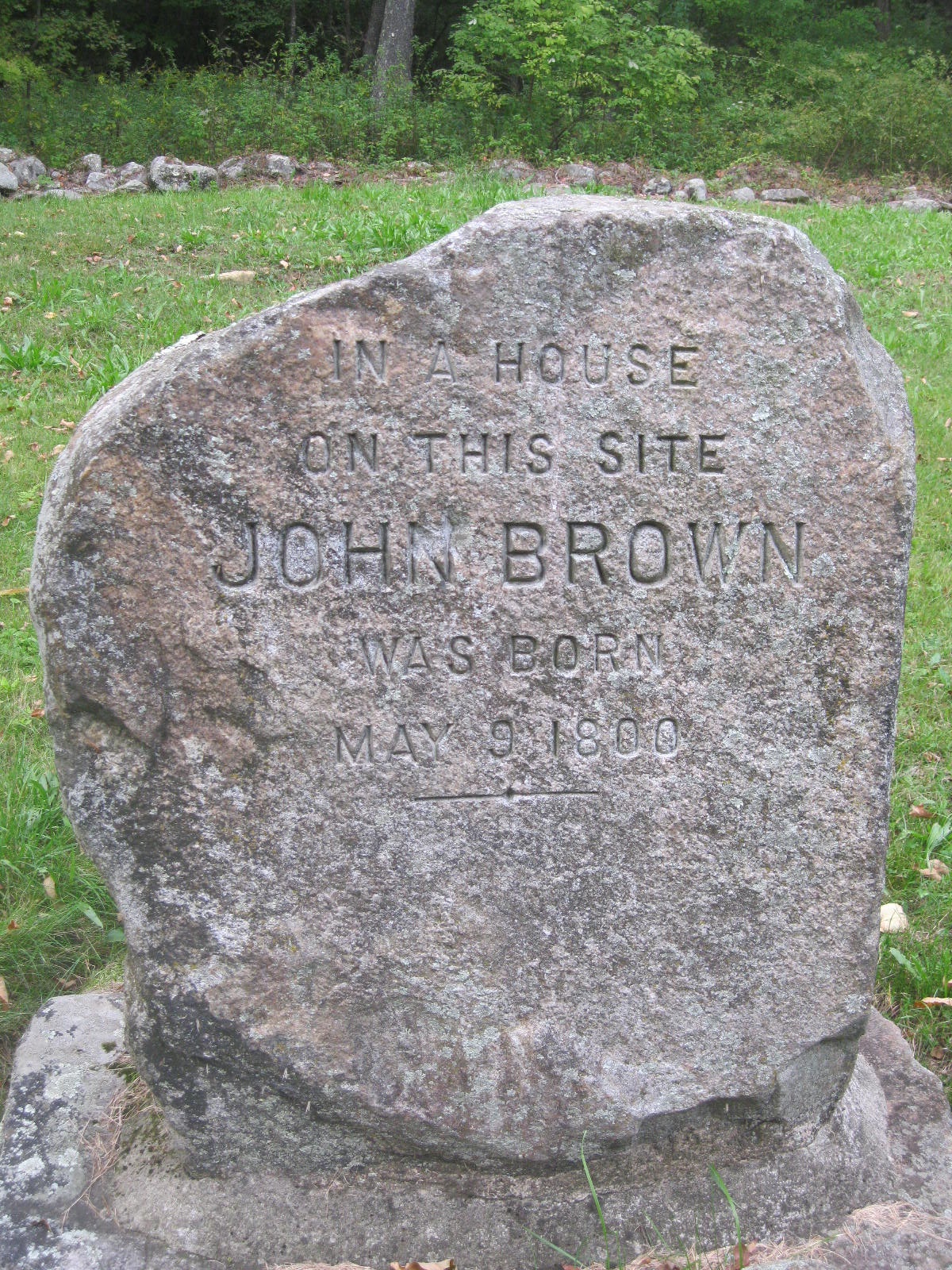
These ruins are all that remain of the birthplace of one of the transformative figures in American history, John Brown.  The house was built in 1785 and was purchased by Brown’s father, Owen Brown, in 1799.

Image

John Brown in 1856

John Brown was named for his grandfather, who died when Owen Brown – one of eleven children – was five.  With the family in dire financial straits, Owen was sent to live with various relatives and friends; ultimately, Owen Brown was sent to work at a young age.  He was trained as a cobbler and worked farming local fields in the summer and making shoes over the winter.

Image

John Brown’s birthplace, in a colorized postcard.

As a teenager he met and married Ruth Mills.  Their first child died before turning two.  They soon after moved to this saltbox-style home in the rocky countryside of Litchfield County.  Here, on May 9th, 1800, John Brown was born.   Of the child’s birth, Owen wrote that there was “nothing very uncommon.”

It doesn’t require too much imagination to speculate that Brown received his military spirit from his namesake grandfather, a Revolutionary War officer.  His religious fervor was likely acquired from his maternal grandfather, a preacher.  The combination of these inherited traits would set Brown on the path to his raid on Harper’s Ferry.

Image

Connecticut’s Western Reserve

 The Browns left the rocky soil of Connecticut for the more fertile fields of Ohio when John was five.  The Browns were joined in this migration to Ohio by thousands of other families.  Known as Connecticut’s Western Reserve – or even New Connecticut – much of the land of Northeastern Ohio was owned by the Connecticut Land Company.  So many Connecticut residents moved to Ohio that the Hartford Courant published an article wondering who would care for the cemeteries of Litchfield County when all the residents had left.  The Browns would have been familiar with the names of many of the places in their new home state – nearby were Litchfield and Kent, Ohio.  The Browns settled in the small community of Hudson.

Image

The James Morris School, site of the Morris Academy. Sounds like a future post!

Even with the move, success continued to elude the Browns.  Owen opened a tannery in Ohio, which prospered for a time.  He thrived enough to send Brown back to Connecticut to be educated – at the Morris Academy, in Litchfield.  He hoped to be a Congregational minister, but money ran out and he returned to Ohio and the family tannery.  Here he developed his abolitionist ideals.

Image

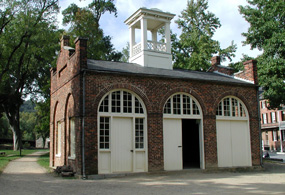
“John Brown’s Fort” in Harper’s Ferry, West Virginia

 John Brown would move often in his life, and often struggled financially.  By the 1850s, his abolitionist ideals became militant and he gained notoriety for his actions in “Bleeding Kansas.”  On October 16, 1859, Brown led 18 men in an attack on the federal arsenal and armory in Harper’s Ferry, Virginia (today West Virginia).  In Brown’s mind, this was the opening action of a campaign to free the nation’s slaves and create an independent slave republic.  Two days later, U.S. Marines under the command of Colonel Robert E. Lee stormed the town’s engine house, which Brown had commandeered as a fort.  Most of Brown’s men were killed or captured.  Brown was wounded in the assault, captured, tried for treason and convicted.  On December 2, 1859, Brown was executed in Charles Town, Virginia (today West Virginia).

His birthplace, meanwhile, was restored in 1901 and opened as a historic house museum, one of the first in Connecticut.  In 1918, however, the house was destroyed by fire.  Still, the forest has been kept from swallowing up the ruins, and in 1932 a granite monument was erected.  In 1997 the site became a part of the Connecticut African American Freedom Trail, and in 2000 the site was acquired by the Torrington Historical Society.

Plans are in the works to improve the visitor experience at the site and to construct interpretive trails on the property.  While these seem to be appropriate actions to commemorate the birthplace of the man whom Herman Melville called the “meteor” of the Civil War, it is certainly a challenge to present the story of a man whom some consider a martyr for a great moral crusade and others a terrorist.

Litchfield’s Water Monument

Litchfield enjoyed a so-called “Golden Age” from 1784 to 1834.  In these fifty years the small town was a center of education -with both Tapping Reeve’s law school and the Sarah Pierce Academy bringing young, intelligent and often well-to-do men and women to town – and of commerce.  In 1810, the population of the town was approximately 4,600, making it, according to the Litchfield Historical Society (http://litchfieldhistoricalsociety.org/history/index.php), the fourth largest settlement in the state.

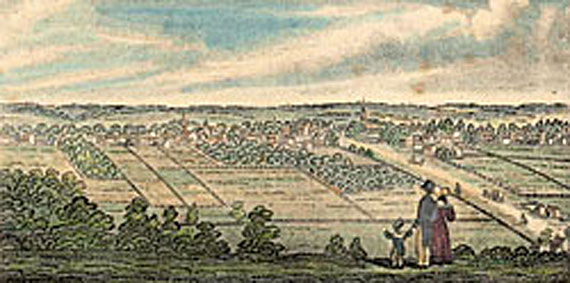
Litchfield, 1836

However, beginning with the United States’ Fourth Census in 1820, the number of residents in Litchfield began a steady decline, with the overall population dropping in nine of the next ten censuses.  By 1910, the town’s population stood at 3,005, a staggering drop of 35%.  There were many reasons for the exodus of Litchfield residents.  Across New England, populations fell in the aftermath of the American Revolution as farmers gave up their rocky lands for the promise of new lands in the west; the migration was so severe that editorials appeared in the Hartford Courant asking who would tend to the graveyards of Litchfield County in the aftermath of the departure of so many residents.  The drop in Litchfield’s population was due to perhaps a simpler cause – it was very difficult for those who lived in town to obtain an adequate supply of water.

Litchfield was first laid out along elevated lands, initially along the ridge marked by present-day North and South Streets, then spreading to the Chestnut Hill area. While this allowed for plots away from swamps and wetlands, it made for great difficulty in digging wells.  A solution to the town’s water problem would be arrived at only with great difficulty and after decades of planning and work.

Fox Brook, Goshen

After discussions of how to solve the water crisis – and the continued decline in the town’s population – the Litchfield Water Company was established in 1891.  The company proposed damming Fox Brook in Goshen to create a reservoir.  While water was brought to Litchfield in 1891, within a few years the source was proven to be inadequate, for it was later written that Fox Brook “could not properly be called a brook, as it practically dried up soon after a rainfall.”

Professor Henry S. Munroe, of Columbia University’s Department of Mining was brought in to solve the problem.  Munroe, whose other contributions to the Litchfield County landscape included the tower on Mount Tom, oversaw the construction of a new pumping plan in the valley below the reservoir, with wells 90 feet deep.  These wells, as Alain White wrote in his history of Litchfield,

“have provided an unfailing supply of pure water ever since, so that however dry the season or how near a water famine many of the surrounding towns were, Litchfield people … had no cause for worry.”

The Litchfield Water Company soon after purchased 500 acres of the surrounding watershed of the reservoir, which they allowed to return to a natural forested state – excepting, that is, the fences they erected to keep out cattle.  Filters were added to the pumps in 1914 to help ensure the purity of the water supply.

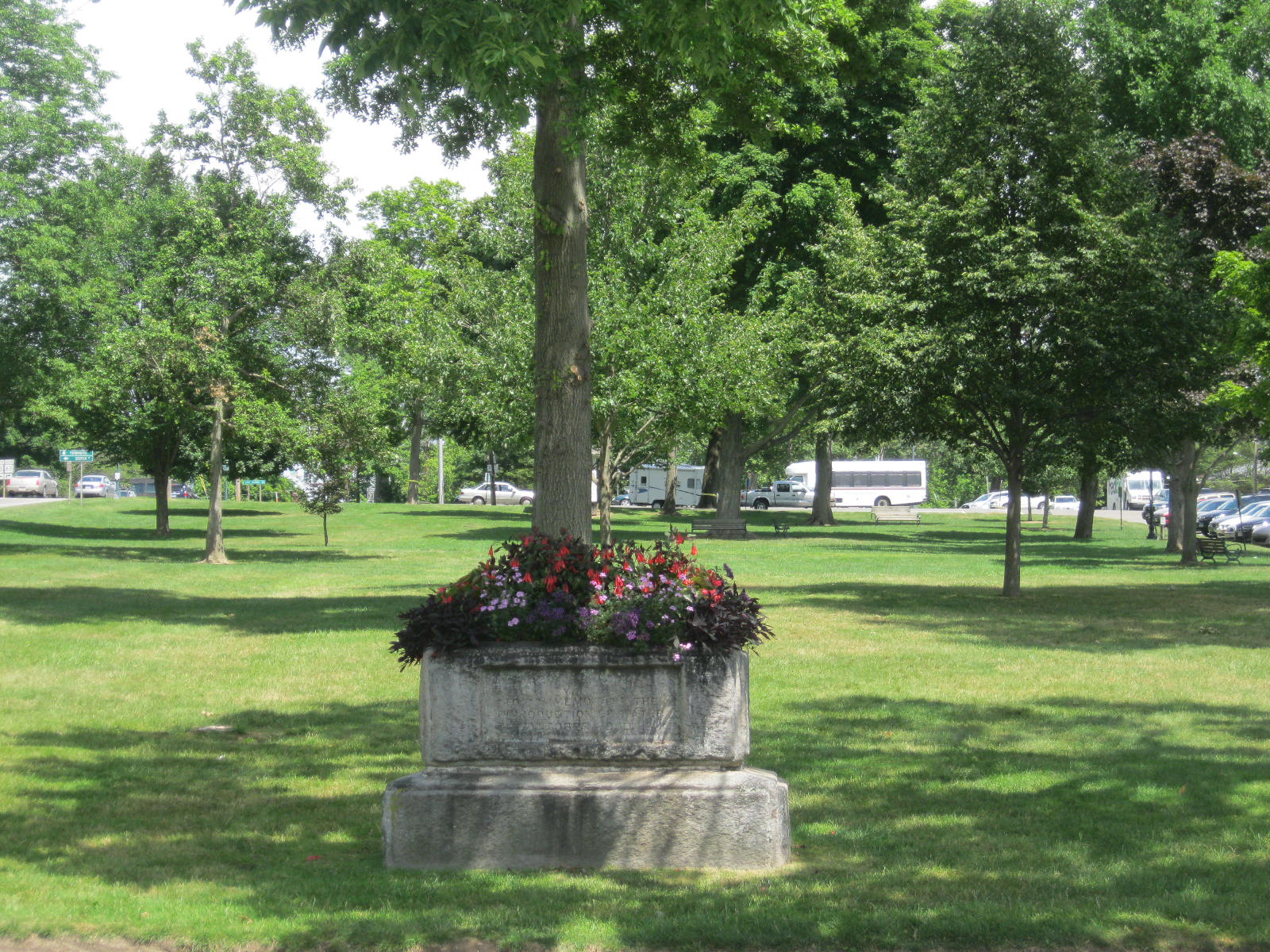
Apparently the mere prospect of a clean and secure source of drinking water excited the commemorative spirit of the town.  In 1890, a year before the water system was activated, a small monument appeared on the western end of the town green bearing the inscription:

Erected by the

VIS

to commemorate the

introduction of water

October 1890.

The Litchfield Village Improvement Company (later the Village Improvement Society, or VIS) was incorporated in 1875 to oversee improvements to the town’s streets, parks, and public structures.  In erecting this particular marker, however, the organization perhaps did more than improve the appearance of their town; they may have commemorated its very survival.

Hidden Nearby: Goshen’s Liberty Pole

Note: Occasionally Hidden in Plain Sight will leave the environs of Litchfield in search of the historical landscape of the area.

On this Fourth of July, a marker on East Street North in nearby Goshen, Connecticut, allows us a window on to past celebrations of American freedoms and liberties.

John Adams famously believed that the signing of the Declaration of Independence “ought to be commemorated, as the Day of Deliverance by solemn Acts of Devotion to God Almighty. It ought to be solemnized with Pomp and Parade, with Shews, Games, Sports, Guns, Bells, Bonfires and Illuminations from one End of this Continent to the other from this Time forward forever more.” He was not far from the mark; he erred only in believing that the celebrations would be held on July 2nd, the day the Continental Congress approved the document.

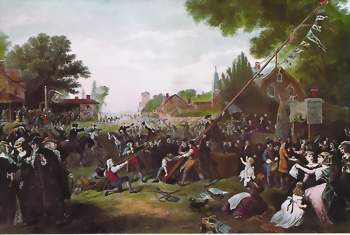
Raising a Liberty Pole in New York City, 1765

In Adams’ time, American patriots expressed their desire for freedom with liberty poles. Liberty poles were a common sight in the years before and during the American Revolution. These were tall, wooden poles, planted in the ground; they were different from regular flag poles in that they were usually topped by either a banner emblazoned with patriotic phrases or a liberty cap. (Liberty caps were conical-shaped hats, often made out of felt or other soft material; they were associated with the quest of Roman slaves for freedom.)

Liberty poles were often seen flying a red ensign; this was a signal for patriots to assemble to discuss the latest acts of British oppression. Naturally, British authorities objected to this means of communication between rebels, and the poles were destroyed. Just as quickly, however, they were rebuilt by Americans – especially the Sons of Liberty.

A French liberty pole

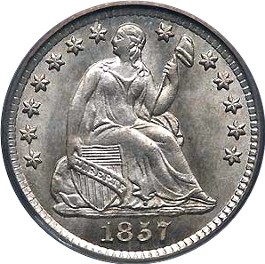
Liberty poles became symbolic of liberty, freedom and independence, and their use caught on in France during the French Revolution. They were also used as symbols of protest by farmers in western Pennsylvania during the period of the Whiskey Rebellion, from 1791 to 1794. As a symbol of liberty and freedom, the liberty pole was a popular image on 19th century American coins. In this 1857 “half dime,” the seated figure of Liberty holds a liberty pole topped with a liberty (or Phyrgian cap) in her left hand:

One wonders about Goshen’s liberty pole; it seems unlikely that there were many people in the area to gather around it in 1776. Why was it erected at this site, and not in the center of town? Was it, perhaps, simply a patriotic statement by an individual? Has there been a dramatic shift in the population center of Goshen? (There are other remnants of colonial Goshen further north on East Street.) Still, the town was proud of its patriotic activity in the Revolutionary Era and chose to commemorate it for the nation’s bicentennial. The town’s history records the events of July 4, 1876:

“In the early morning a company had assembled at the spot where a liberty pole had stood during the Revolution, and with appropriate ceremonies the stars and stripes were raised and flung to the breeze.”

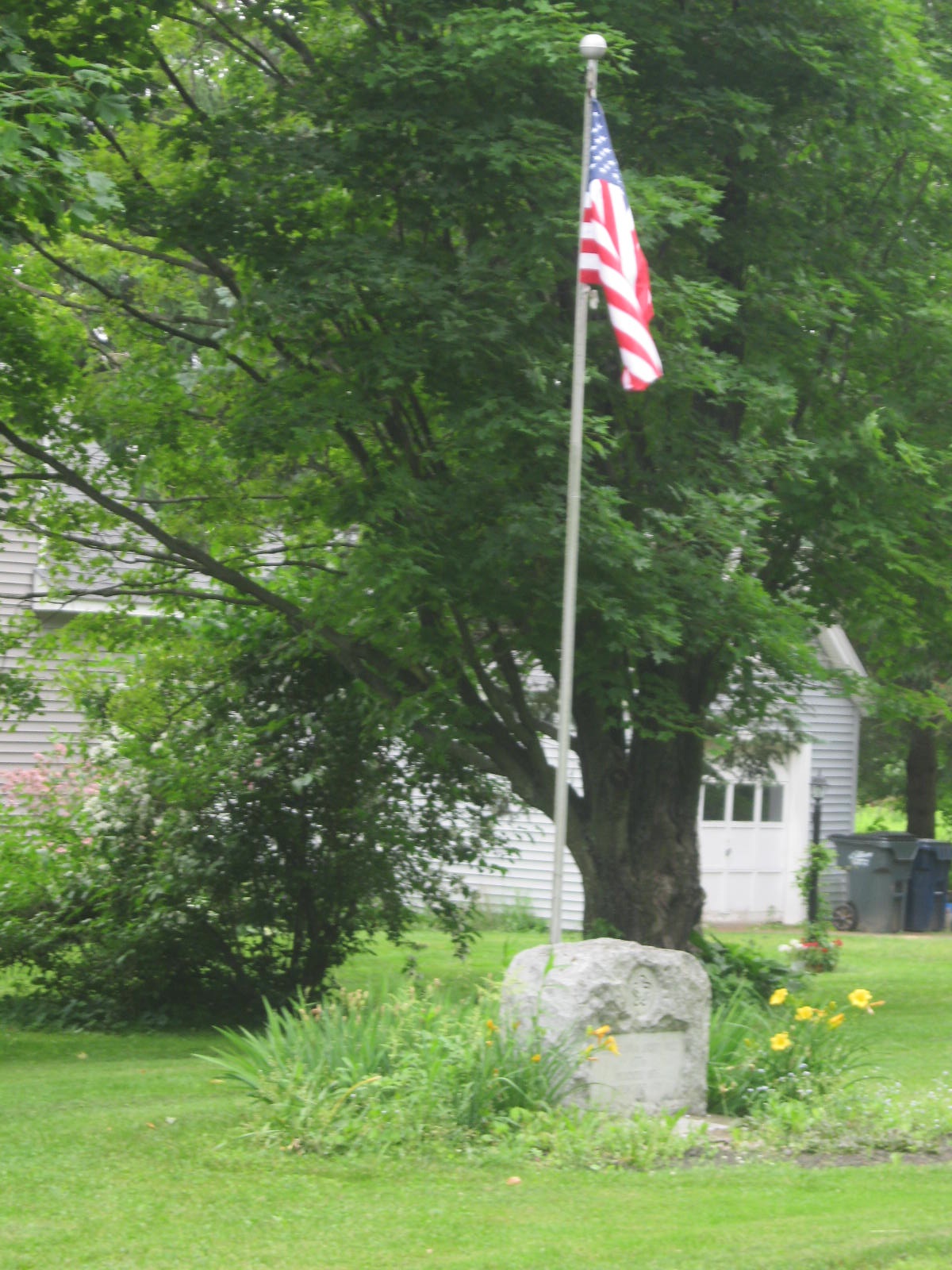
One hundred years later, Goshen’s liberty pole was rededicated, as part of the official celebration of the nation’s bicentennial. A stone marker was dedicated, bearing the official seal of the Bicentennial, a flag pole erected behind it, and a time capsule buried.

We will celebrate the 236th anniversary of the nation’s independence in the style predicted by Adams – with pomp, parades, sports, and illuminations. Still, it is worth a trip to Goshen to be reminded of how freedom and liberty were celebrated in a simpler time.

A Post on Posts (or, Hold Your Horses!)

They stand as vestiges of a bygone era of transportation, reminders of the age of the horse.  More than a dozen hitching posts remain along the streets and sidewalks of Litchfield.  They evoke, in the imaginative passerby, images of riders in the saddle, of wagons or coaches, of landaus or sleighs.

Illustration from John Barber, “Connecticut Historical Collections,” (1838) showing horse-drawn traffic entering Litchfield.

Americans were a restless people in the 18th and 19th centuries, crossing the Appalachians and pushing the frontier first to the Mississippi and ultimately to the Pacific.  This was accomplished primarily on horseback or with wagons.  The horse played a vital role in Litchfield’s commercial life; as the railroad did not reach the town until 1872 and there is no navigable waterway, all goods had to enter town via horse-drawn conveyances.

Hitched horses, RIchmond, VA, 1865.
Photo courtesy of hmdb.com

The hitching post was the parking space of the 18th and 19th century.  Most houses had them; it is likely that nearly all commercial enterprises had them.  Hitching racks secured several horses at one time.

Upon arriving at his or her destination, the rider would dismount the horse or vehicle, and tie the reins which were attached to the horse’s bridle to the post with a “hitch”, a type of knot or tie.  Hitches varied in style, and travelers could opt for the simple clove hitch if they had only a horse and were in a hurry, or the more difficult but secure rolling hitch to secure a wagon or carriage.


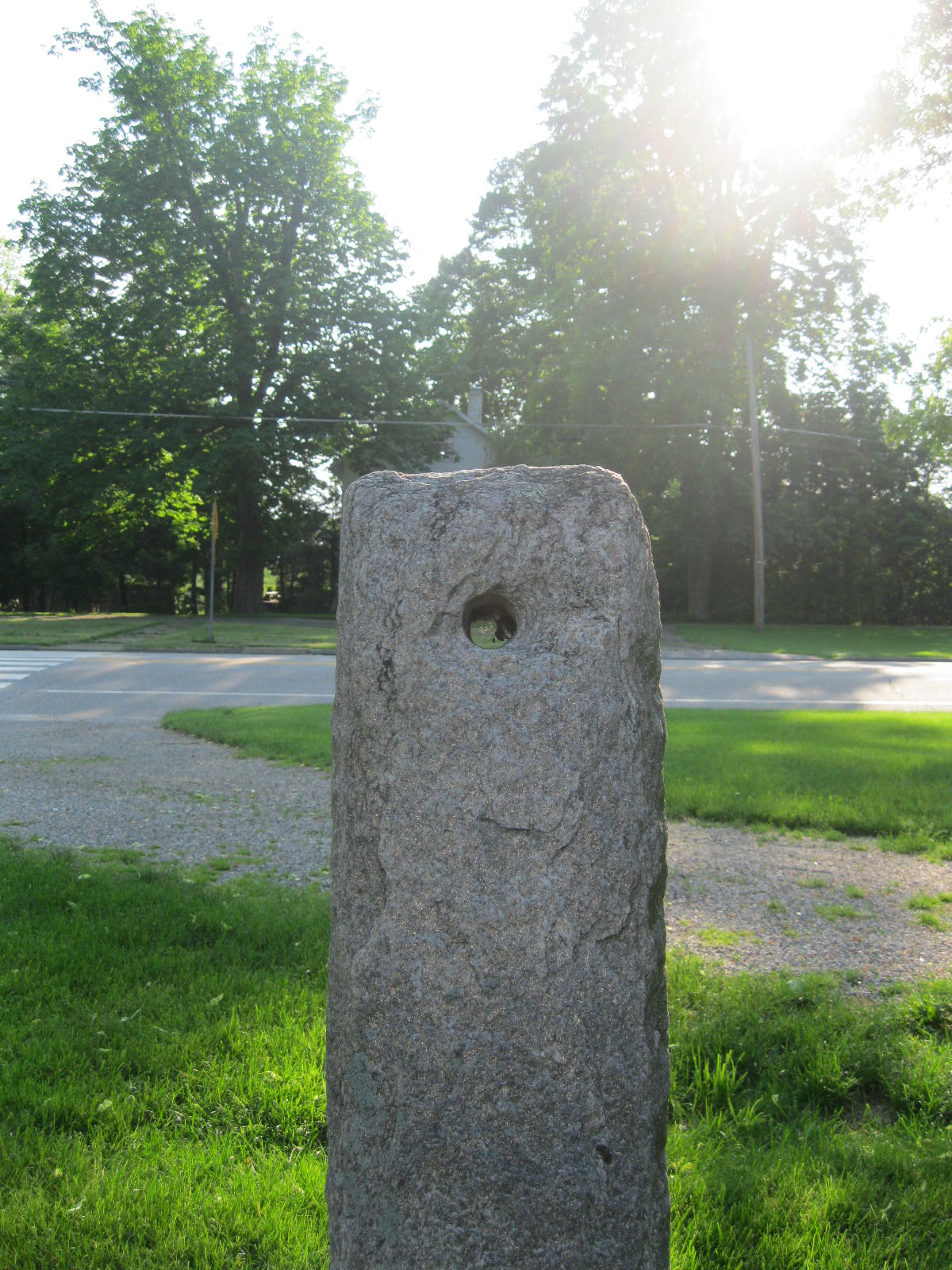
Hitching posts are of different materials and sizes, and present a variety of ways in which a rider could secure his horse.  Those that remain in Litchfield are most often made of granite, although there are examples of sandstone posts as well.  One wonders about the industries that grew up to fabricate the posts.  Were they presided over by local craftsmen, or were they brought in to Litchfield from distant manufacturers?

Most often the posts are found near the present sidewalks.  One walking the sidwalks on North and South Streets sees many examples of hitching posts.  They stand close to the sidewalks, most often as solitary sentinels.  However, the careful observer will see a house on Prospect Street with twin hitching posts.

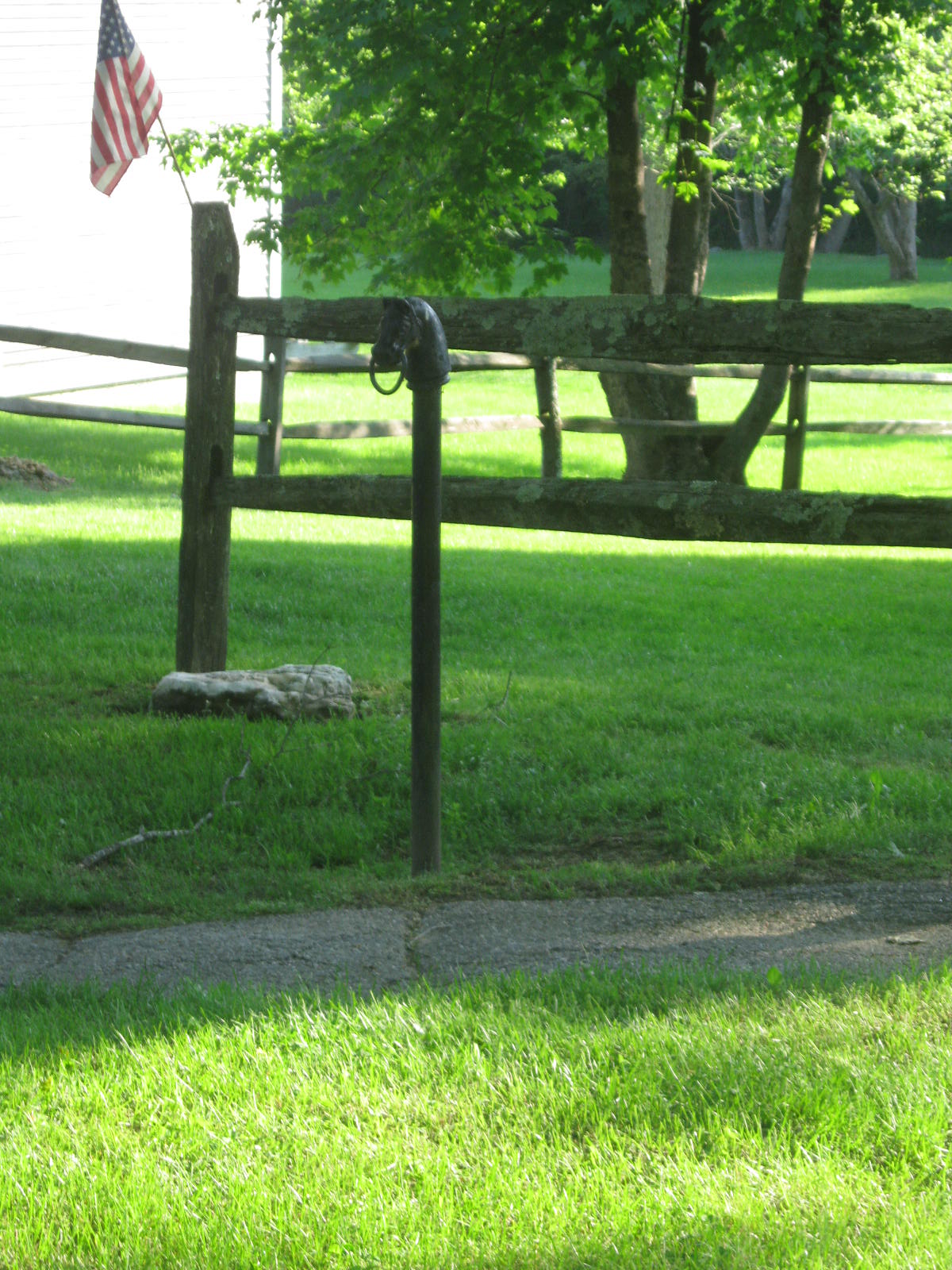
This cast iron hitching post was likely made outside of town.  Molten iron was cast into the desired design and allowed to cool.  A simple search for “hitching post images” reveals many different designs of cast iron posts.

Why do more not remain?  Perhaps many were made of wood and eroded over the years.  Did owners remove their hitching posts when automobiles made them unnecessary?  Did the paving of the roads widen existing roadways and necessitate the removal of posts?  Are those that remain all original, or were they erected simply to be ornamental?  Many of those that still stand have house numbers posted on them.

While obsolete, there is a sort of grace and beauty to them.  It is doubtful that anyone will ever say the same about parking meters.