Hidden Nearby: Terryville’s Dorence Atwater Monument

2014-04-27 15.22.21

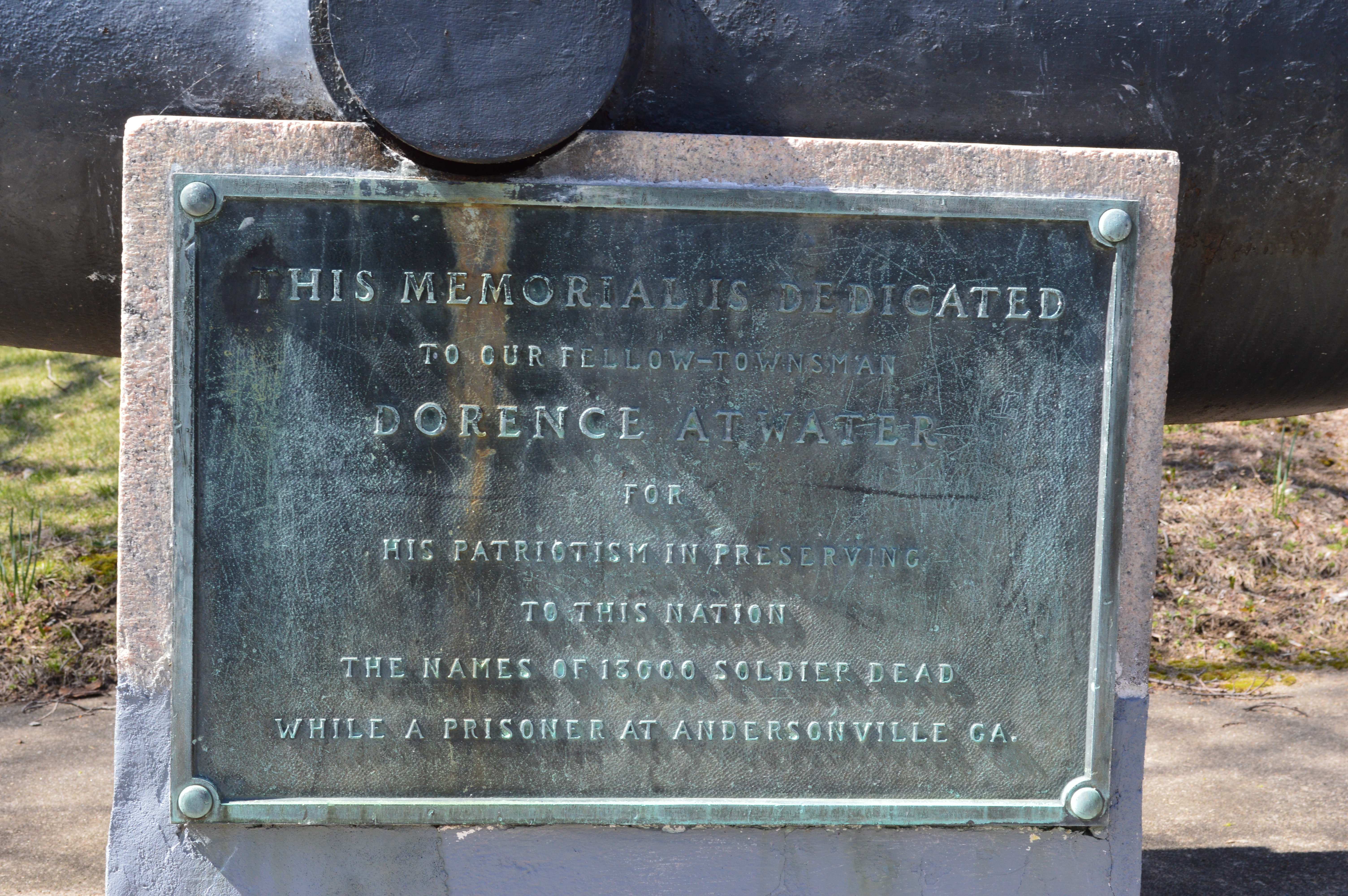
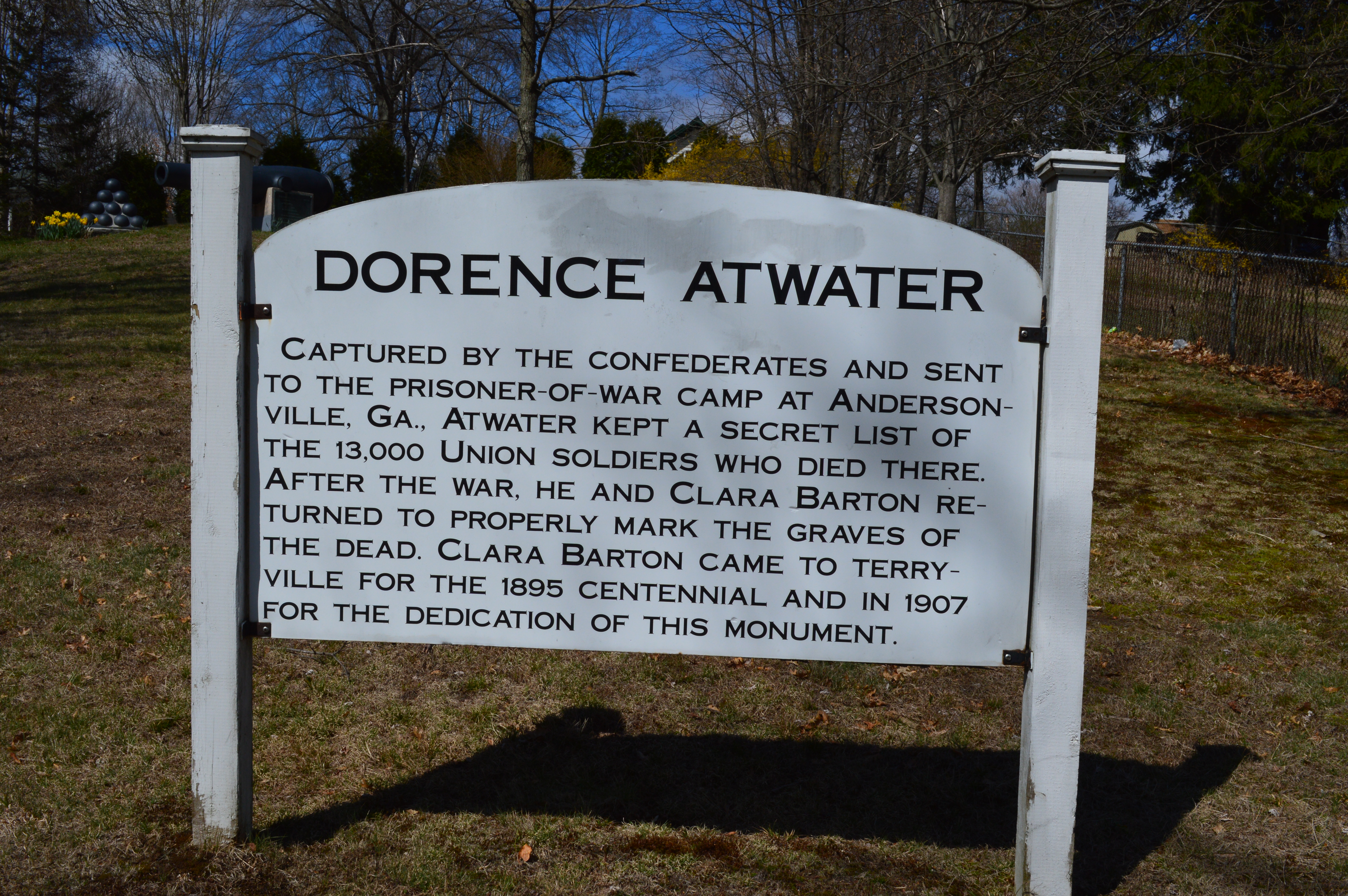
This monument in Terryville’s Baldwin Park offers testimony to one of the great episodes in Litchfield County’s Civil War history.

atwater2

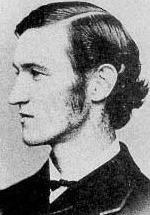
Dorence Atwater

Dorence Atwater was only 16 when he enlisted – lying about his age – in the Union army. He was serving as a courier, running messages for a cavalry unit, when he was captured during the Gettysburg Campaign in July 1863.

WER1676

Camp Sumter, Andersonville, Georgia

Initially imprisoned at Belle Island in Richmond, Atwater was soon transferred to the notorious Camp Sumter – better known as Andersonville.   He fell ill in March 1864, but recovered to become a record keeper. While this removed him from the regular prison population, Atwater’s task was a morbid one, recording the names of the men who died.   The young man from Terryville, still only 19 years old, was consumed with ensuring that, in the words of a Hartford Courant article, “family members would know the fate and final resting spot of their loved ones.”

wcbbrady

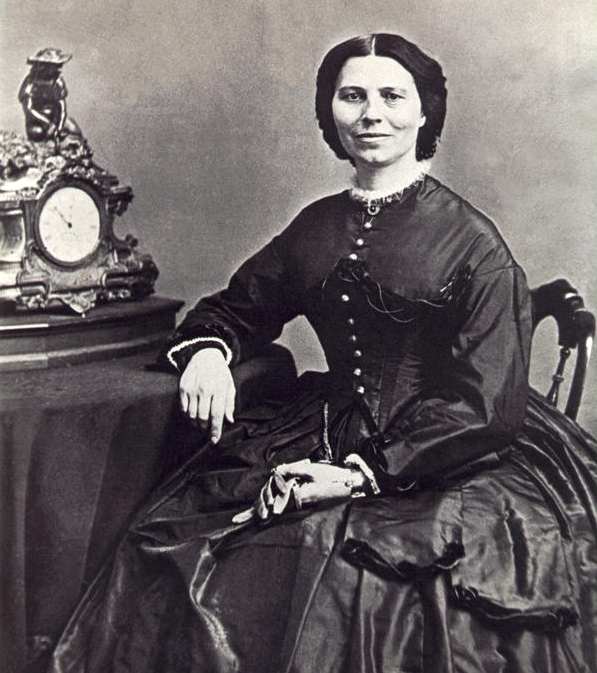
Clara Barton

Atwater was paroled from Andersonville in March 1865 and upon leaving, smuggled the camp’s roll out in a bag. The punishment, had he been caught, would have been extreme. After the war, Atwater returned to Andersonville with Clara Barton to locate and mark the graves.  In all, approximately 13,000 Union prisoners died at the prison camp. For his actions, Barton reported to family members, “for the record of your dead you are indebted to the forethought, courage, and perseverance of a 19-year-old soldier named Dorence Atwater.”

dorence-atwater_wife

Princess Moeta Salmon Atwater

Atwater’s continued efforts on behalf of the victims of Andersonville – in this case protecting the list of names from those who wished to use it for commercial purposes – resulted in his court martial. Barton, however, took Atwater’s case directly to President Andrew Johnson, who not only pardoned Atwater but appointed him US consul to the Seychelle Islands. He followed this by serving as US consul to Tahiti, where he met and married his wife, an island princess. He also engaged in several highly successful business enterprises, including establishing a shipping line.

2014-04-27 15.22.33

Atwater and his wife returned to Terryville in 1908 to view the monument the town had erected in his honor in Baldwin Park. The monument had been dedicated one year earlier, with his great friend Clara Barton in attendance.

2014-04-27 15.21.57

The Phelps Block and the Fire of 1886

DSC_0238  Litchfield’s great fire began at 1:30 a.m. on June 11, 1886 in Moore and Maddern’s General Store, which stood on West Street next to the Mansion House, a large hotel on the corner of West and South Streets.  A New York Times article reported that “the flames spread rapidly, there being no adequate means of fighting them.”  The fire, which burned both down South Street and West Street from its origin, was extinguished only when it had burned all the flammable structures it could reach.

Ruins of the Mansion House.

Ruins of the Mansion House.  The Litchfield Historical Society.

Guests at the hotel were able to escape with their possessions, but the structure itself burned to the ground.  The Times aptly reported, “it is fortunate that the blaze did not occur during the height of the season, when it certainly would have been accompanied by serious loss of life.”

West Street ablaze, 1886.  The Litchfield Historical Society.

West Street ablaze, 1886. The Litchfield Historical Society.

The court house was also destroyed, although the county records were saved.  Thirty feet west of the court house stood a brick building.  Here the westward progress of the flames were halted. The town’s business district was described as “simply cleaned out.”  Estimates of the cost of the destruction ranged between $60,000 and $200,000, an amount that, adjusted for inflation, would be in the tens of millions of dollars today.

DSC_0234The town received an ultimatum that the court house be rebuilt, otherwise judicial proceedings would be moved to New Milford or Winsted.  A new court house was constructed at a cost of $13,000.  Tragically that court house was destoyed twenty-six months later when another fire swept the town; this one began on the lower end of West Street and burned up to the court house.  Town fathers immediately revoked all building permits for wooden structures and rebuilt the business district.  The Mansion House was replaced by the Phelps Block, built by merchant and real estate developer Eugene Phelps.  With five shops on the ground floor and an opera house on the top, it was the crown jewel of the rebuilt town.  The stone carved “Phelps Block 1887” still bears witness to the town’s recovery from the fires.


Hidden Nearby: Sharon’s George Whitefield Monument

george whitefield


The Great Awakening, which swept the American colonies in the 1740s, arose in response to the increasingly pedantic tone of Congregational ministers and the increasingly structured and formal organization of the churches. Instead, those ministers involved with the Great Awakening (who became known as New Lights as opposed to the Old Lights who favored the traditional ways) looked to shift the emphasis of their congregants to a religion based upon spirituality. Among the best known of the New Lights were Jonathan Edwards and George Whitefield.

pgeorge-whitefield

George Whitefield

Litchfield County, a bastion of traditional Congregationalism, was only lightly touched by the Great Awakening.  However, Whitefield preached in Sharon in June of 1770, an occasion commemorated with a marker that still stands on the Sharon Green.

whitefield

Whitefield preaching.

Whitefield was born in England in 1714 and first came to the American colonies in 1738, landing in Georgia.  He preached there for about a year, returning to England to raise money for an orphanage to be built near Savannah.  He traveled to the colonies again in 1740, preaching before thousands in New England and New York, before traveling on horseback from New York to Charleston, the longest such trip undertook to that time by a European.

Another image of Whitefield preaching.

Another image of Whitefield preaching.

A devout Calvinist, Whitefield believed that God maintained sole agency over salvation, but did freely offer the gospel, ending his sermons by saying, “Come poor, lost, undone sinner, come just as you are to Christ.”   Whitefield preached to tens of thousands during his many visits to America, and his sermons were tremendously influential.  By challenging the traditional power structure of the Congregational church, he planted seeds in the minds of Americans that they could also question authority in monarchical government.  While Whitefield died in September 1770, a few months after his visit to Sharon, the town’s ardent commitment to the patriot cause was perhaps influenced by his preaching.

Sarah Pierce’s Litchfield Female Academy

DSC_1453

The years following the American Revolution were noted for a national impulse to establish grammar schools for young children, and academies for those considering college.  While there were several academies for girls operating in the county, none was more influential or noted than Sarah Pierce’s Litchfield Female Academy.

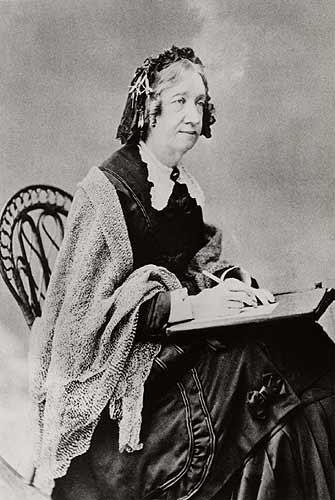
1941-02-2_sarah_pierce_-_resize

Sarah Pierce (Courtesy of National Endowment for the Humanities)

      Pierce was born in Litchfield in 1767.  She never married and instead dedicated her life to educating young women.  Pierce’s father died when Sarah was 16, and her brother, John Pierce, Jr., invested in an education for her sister in the hopes that she would become a teacher and support herself.  The first classes were held in the dining room of the Pierce home.

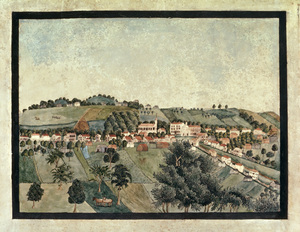
Rebecca Couch Denison - View of Litchfield

            By 1798, Pierce had termed her school the Female Academy and began a subscription list to build a structure, which by 1803 was erected at a site on North Street indicated today by a stone marker.  Here young women were introduced to Pierce’s revolutionary ideas about education – namely, that girls should be taught what boys were, including geography and history.  Pierce went so far as to write her own histories when she couldn’t find suitable texts.

Litchfield Female Seminary in Connecticut

Litchfield Female Academy

            At the turn of the 19th century, so many students were coming in such large numbers – 130 in one year along – that Pierce needed to hire additional teachers.  The subjects they were responsible for grew to include chemistry, astronomy, and botany.  Academic pursuits were balanced with artistic endeavors including music, dancing, singing, embroidery, drawing, and painting.

John Pierce Brace

John Pierce Brace (Courtesy of Litchfield Historical Society)

     Pierce brought in her nephew John Pierce Brace, a graduate of Williams College, as a teacher and her ultimate successor as head of the school.  Pierce was noted for his hands-on approach to education, as noted by Mary Wilbor in 1822:  “Mr. Brace had all his bugs to school this P.M.  He has a great variety, two were from China, which were very handsome, all the rest were of Litchfield descent, and he can trace their pedigree as far back as when Noah entered the ark.”

Needlepoint by Sally Miller, Litchfield Female Academy student, 1811

Needlepoint by Sally Miller, Litchfield Female Academy student, 1811

Pierce’s students boarded with Litchfield families.  The town was home to several large boarding houses, including Aunt Bull’s on Prospect Street, and may homes took in students from the Female Academy and the Litchfield Law School (see below).  Pierce was also committed to teaching her students proper etiquette, as evidenced by the following rule:  “You are expected to rise early, be dressed early, be dressed neatly, and to exercise before breakfast.  You are to retire to rest when the family in which you reside request you.  You must consider it a breach of politeness to be requested a second time to rise in the morning or retire of an evening.”

Connecticut tercentennial sign on North Street.

Connecticut tercentennial sign on North Street.

Mary Ann Bacon attended Pierce’s academy in 1802, and boarded with the Andrew Adams family on North Street.  Her diary entry for June 14th, 1802 provides an insight into a typical student experience:

Arose about half past five, took a walk with Miss Adams to Mr. Smith’s to speak          for an embroidering frame.  After breakfast went to school.  I heard the Ladies read      history, studied a Geography lesson and recited it.  In the afternoon I drew read and      spelt.  After my return home my employment was writing and studying I spent the        evening with Mrs. Adams and retired to rest about half past nine o’Clock.

Over 3,000 young women – and about 120 young men – were educated at Pierce’s school before it closed in 1833.  Their intellectual, social, and artistic abilities helped make Litchfield one of early 19th century America’s most cosmopolitan towns.

Carriage Steps

A prominent carriage step along North Street.

A prominent carriage step along North Street.

An earlier post examined the history of Litchfield’s hitching posts.   A similar reminder of Litchfield’s transportation history are the carriage steps (or mounting blocks) that dot North and South Streets.

2013-08-06 12.06.38

Mounting blocks were simple stone blocks – often granite – that allowed passengers and easier way of climbing on board a carriage or stagecoach.  Carriage steps were a fancier alternative, with two steps often carved into the stone.

2013-08-06 11.47.23

A remnant of a mounting block along South Street.

While they were often found outside the homes of the town’s wealthier residents, they speak to the importance of carriages and stages and means of transportation.  These conveyances brought students to the Tapping Reeve Law School and Sarah Pierce’s female academy.  The wealth and cultural refinement of these students helped establish the cosmopolitan atmosphere of Litchfield in the early 19th century.

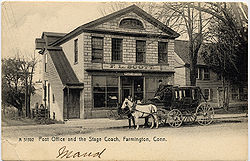
A stagecoach in Farmington; it was perhaps bound for Litchfield.

A stagecoach in Farmington; it was perhaps bound for Litchfield.

Historian Lynn Brickley has written that while stagecoaches were forbidden from traveling at night, advertisements stated that the stage would leave Litchfield at 3 a.m.  A stage could travel 4-5 miles per hour, with stops every ten miles to change horses.  Still, rugged roads could slow the process, and the stage took 14 hours to travel 24 miles.

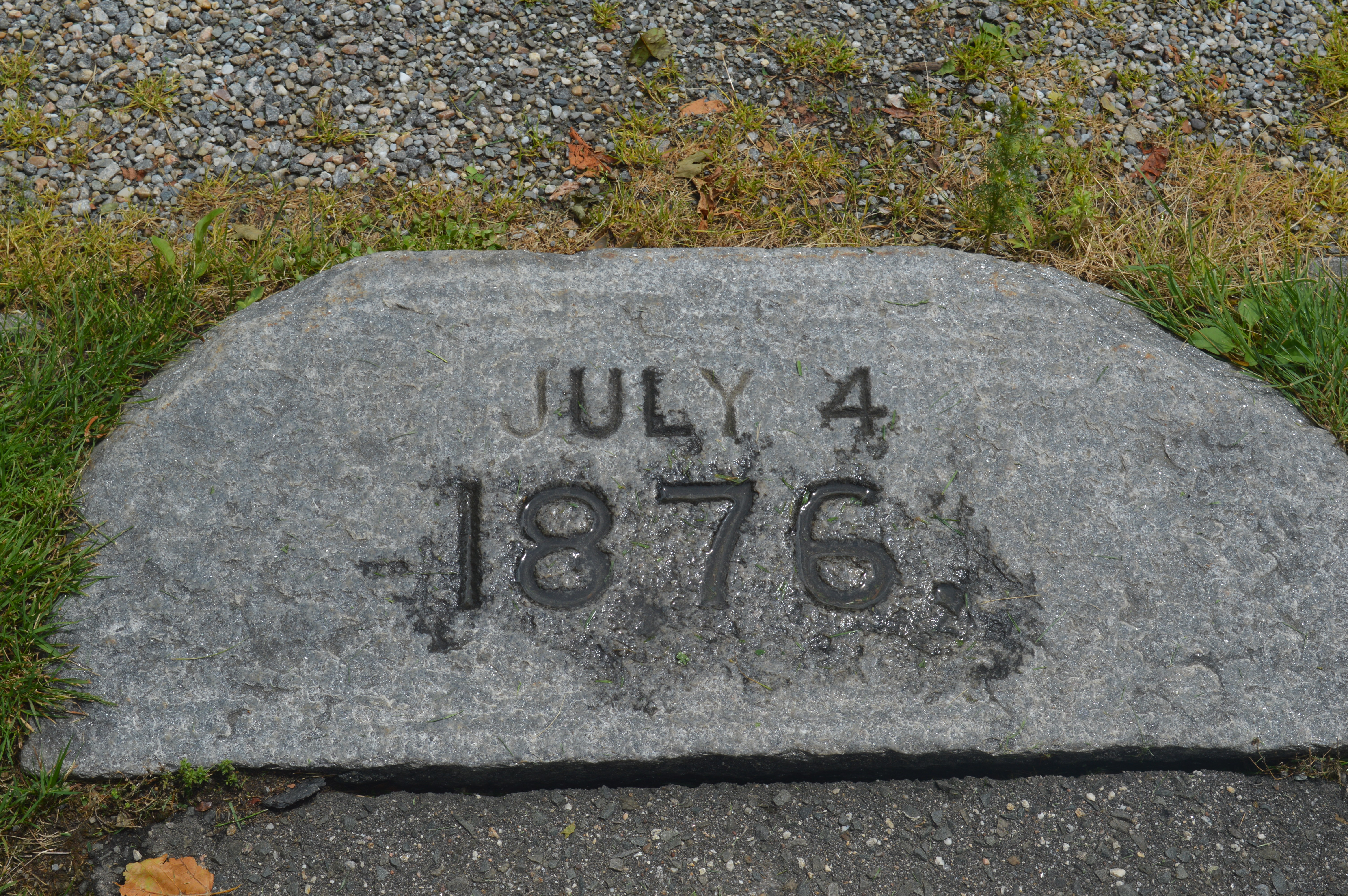
George Woodruff's centennial inscription may have served as a mounting block.

George Woodruff’s centennial inscription may have served as a mounting block.

Ultimately the arrival of the railroad would make stagecoaches no longer economically viable, and automobiles would do the same to carriages.  The implements of horse-drawn travel – hitching posts and carriage steps – remain as testimony to their importance in an earlier age.

Hidden Nearby: Sharon’s Moravian Monument

Jan_Hus_2

Jan Hus

The Unity of Brethren, better known as the Moravians, also played an important role in the early religious history of the county.  The group’s nickname stems from the refugees from Moravia, an area of the present day Czech Republic.  The Moravians were essentially followers of the Catholic revolutionary Jan Hus, who advocated for giving lay people a more prominent role in the church and having masses said in vernacular languages.  Hus was burned at the stake in 1415.

Nikolaus_Ludwig_von_Zinzendorf_(portrait_by_Balthasar_Denner)

Nicolaus von Zinzendorf

One of the principal tenets of the Moravian church is the “ideal of service,” which emphasizes the importance of educational and missionary work.  At the forefront of these ideals was Count Nicolaus von Zinzendorf, a German social reformer and Moravian bishop who led efforts to spread Christianity through the Native Americans of the Northeast.  Around 1740, von Zinzendorf himself came to America, and preached to Indians in New Milford.  He was so successful in igniting the fire of Moravianism that the natives agreed to move with Zinzendorf to Bethlem (today Bethlehem), Pennsylvania.  Harsh conditions and illness, however, soon led the Native Americans to return.

V05-26

Monument to Rauch in Pine Plains, NY. Courtesy of Ancestry.com

Around the same time, a second Moravian mission was established in Sharon to minister to the settlements at Shekomeko (Pine Plains, NY), Wequagnock (near Sharon), and the Schaghticokes in Kent.  The mission was founded by the Reverend Christian Henry Rauch, who presided for two years before turning the work over to 26 year-old Reverend Gotlieb Buetner, who died two years later, and was buried at the site of the mission.

DSC_0656

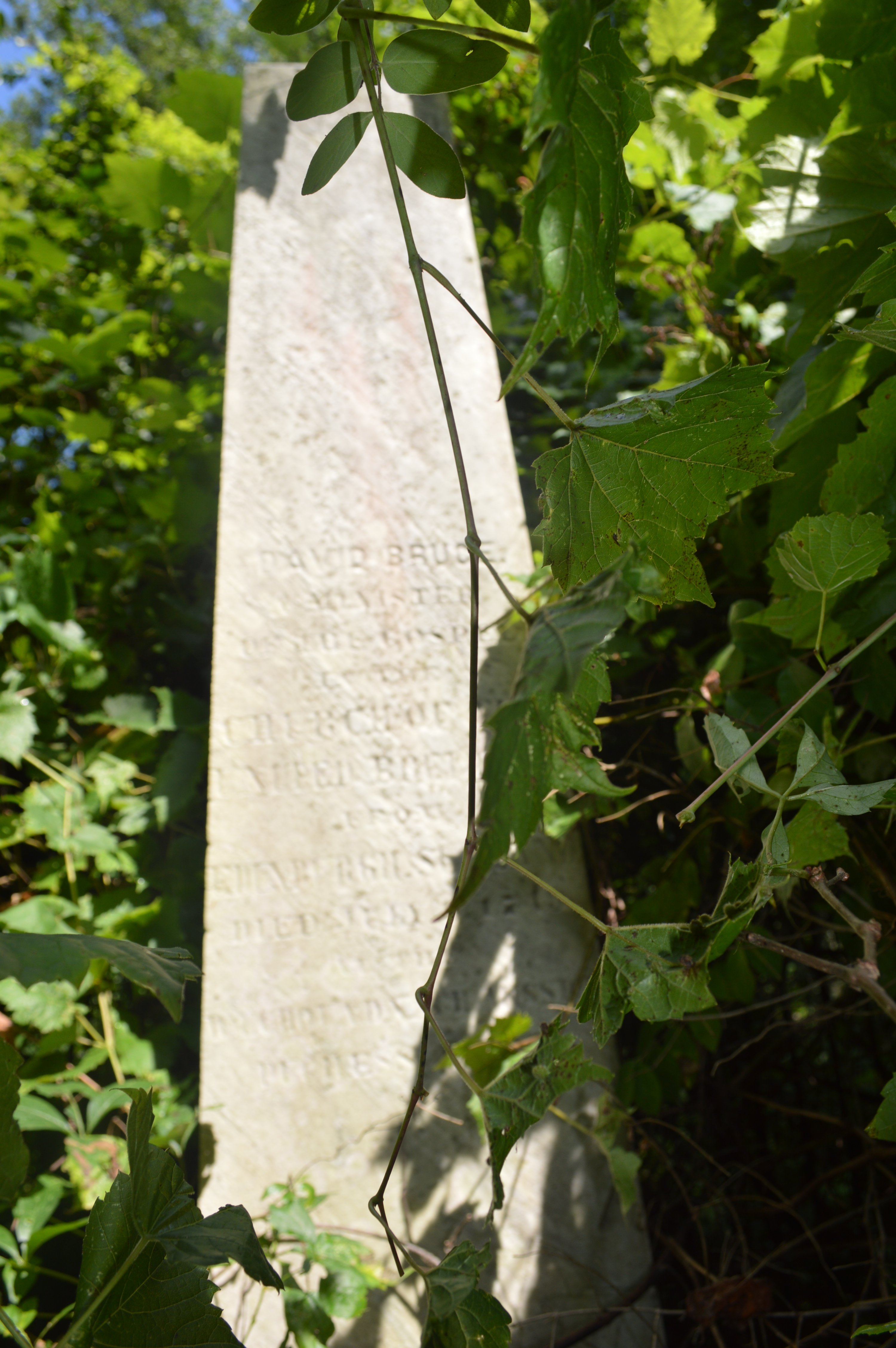
New York State chased the Moravians out of their borders in 1745, fearing that the missionaries were secret emissaries of the Catholic Church.  This led numerous Christian Indians to settle around Sharon, where the Moravian mission continued under the leadership of David Bruce, a Moravian teacher from Edinburgh, Scotland.  In 1789, George Loskiel wrote of Bruce’s activities in his History of the Moravian Missioners Among the North American Indians:

Bruce … resided chiefly in a house at Wequagnock … but sometimes resided at         Schaticook, whence he paid visits to Westenhunk, by invitation of the head chief of the Mohikan nation, soweing the seeds of the gospel wherever he came …. Twenty Indians were added to the church by baptism.  Brother Bruce  remained in his station till his happy departure out of time …. He was remarkably cheerful during his illness, and his conversation edified all who saw him.  Perceiving that his end approached, he called his Indian brethren present to his bedside, and, pressing their hands to his breast, besought them fervently to remain faithful unto the end, and immediately fell asleep in the Lord.

DSC_0658

That was July 9, 1749.  A monument to Bruce and Joseph Powel, a later Moravian missionary, was erected in Sharon in October 1859, 110 years after Bruce’s death.  The monument still stands, hidden deep within the woods along Route 361.  On its east face is the following passage from Isaiah:

How beautiful upon the mountains

Are the feet of him that bringeth

Good tidings, that publisheth peace,

That bringeth good tidings of good,

That publisheth salvation.

Special thanks to my friend and colleague Warren Prindle of Sharon for not only bringing this monument to my attention, but also hacking through the woods with me to find it!

Hidden Nearby: The Harwinton Sign Post

DSC_0298

Harwinton derives its name from the fact that it was settled in 1726 by emigrants from Hartford and Windsor, and it was originally called “Hartford and Windsdor’s Town..”  Those settlers from Hartford were given land rights in the eastern part of town, while those from Windsor were given the west side of town.  A post was put on the dividing line, and that post evolved into the Harwinton’s well-known Sign Box.

greencoverreduced

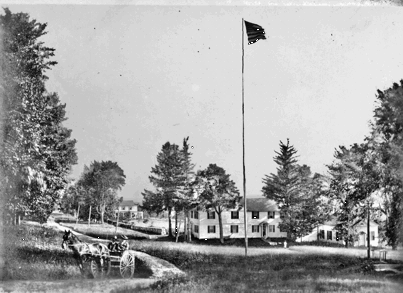
An old image of the Harwinton green, courtesy of the Harwinton Historical Society.

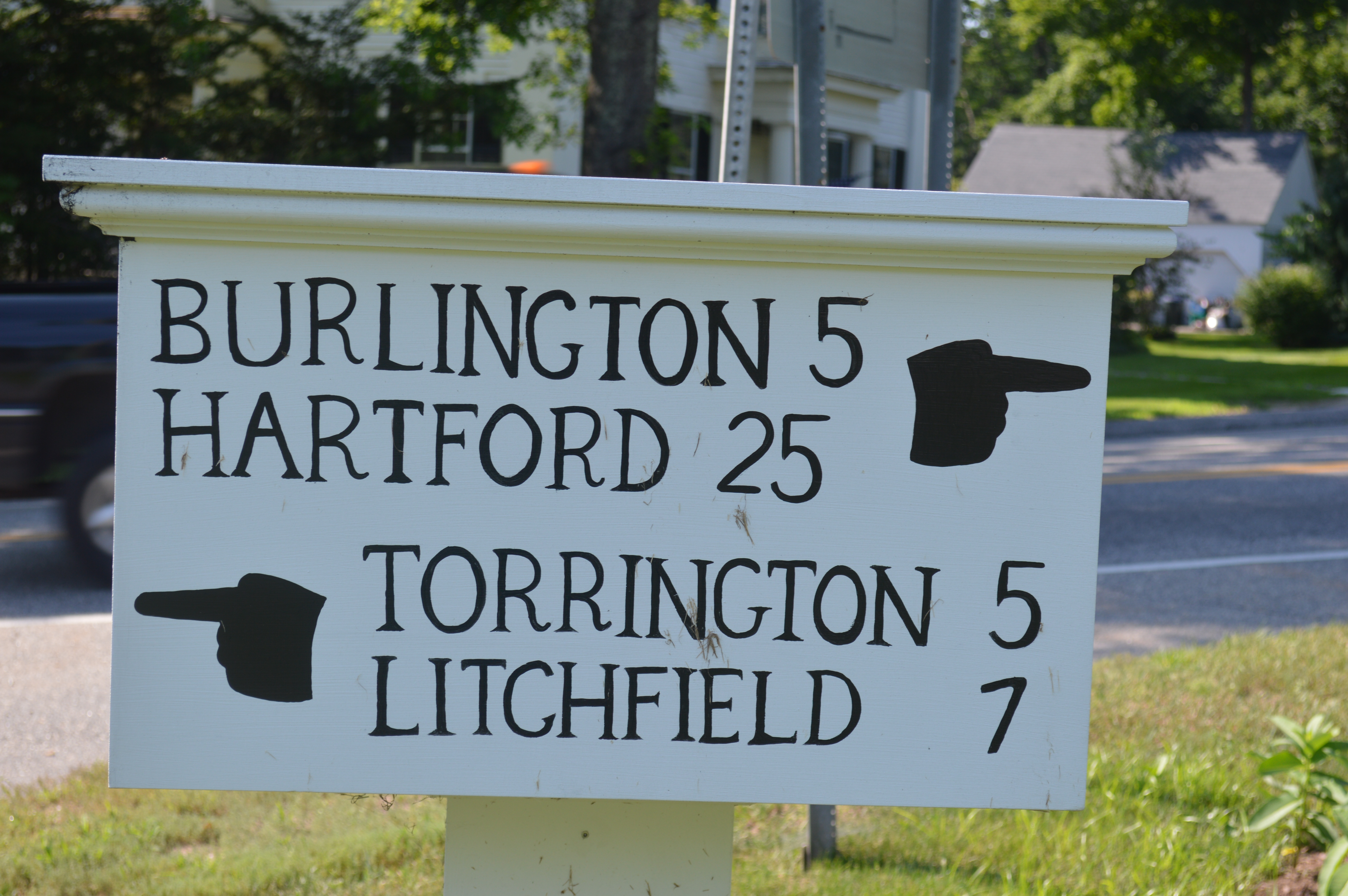
The sign box was designed by Lewis Smith, who served as the town’s probate judge from 1844 to 1860.  In addition to providing directions and distances to nearby towns, the sign box also provided residents a means of posting notices to their fellow townspeople in the days before other forms of communication.

DSC_0300

In 2006 a wayward motorist destroyed the sign box, which was soon replaced.  In May 2013, Larry Connors, a woodworker in town, constructed a more permanent structure and Amanda Surveski, a student at Lewis S. Mills High School, painted the letters, distances and directions.

DSC_0299

While thousands of drivers pass it every day without noticing it, the Harwinton sign box is one of those landmarks that give our New England towns their character.

The Beecher Monument

2013-06-28 11.30.30

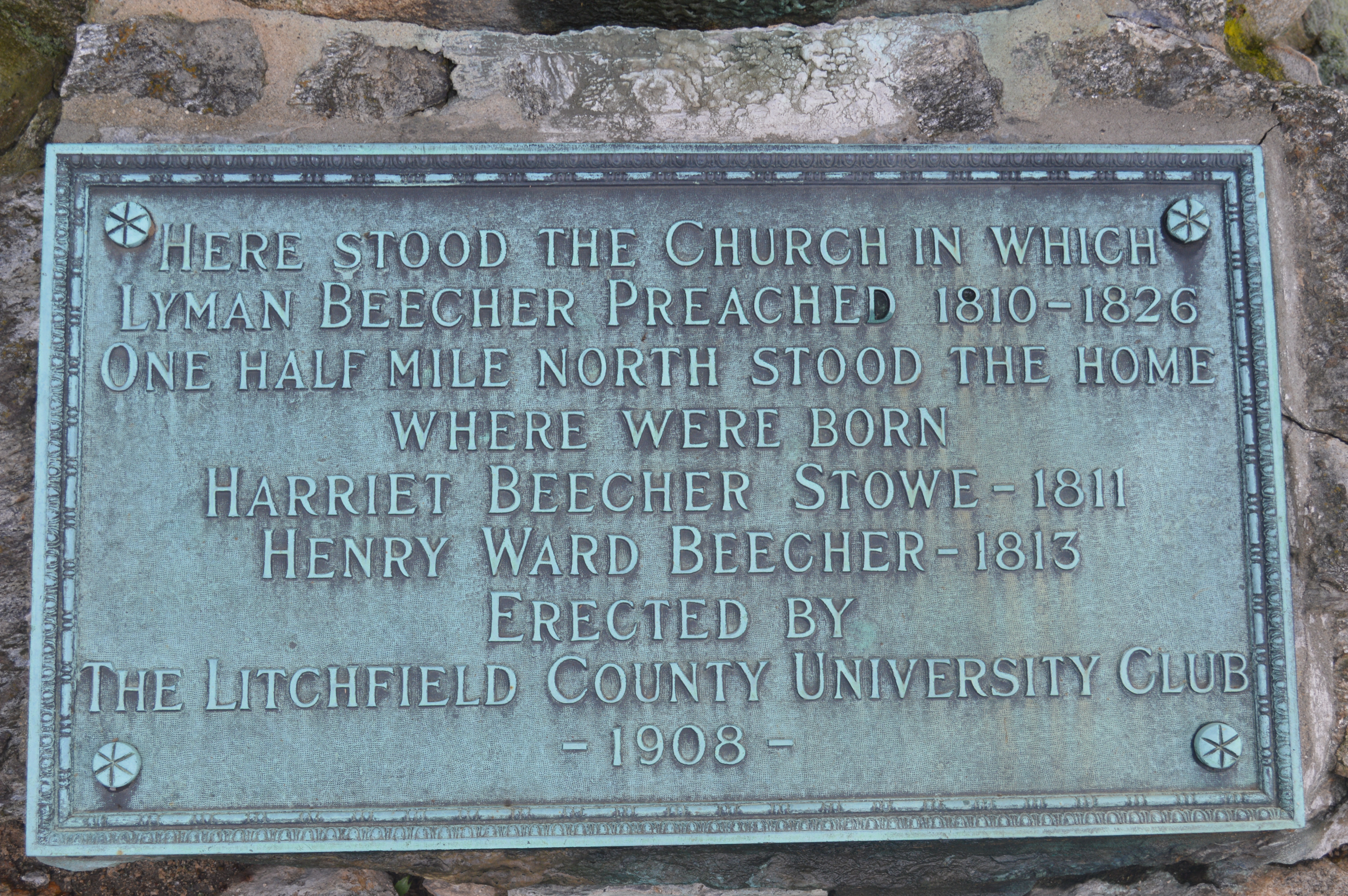
The monument sits prominently on the eastern end of where Route 63 passes through the Litchfield green, a fitting location for the monument to Litchfield’s most prominent family.

Lyman_Beecher_-_Brady-Handy

Lyman Beecher (1775-1863)

Lyman Beecher was born in New Haven in 1775 and graduated from Yale in 1797.  The following year he became the pastor of the East Hampton (Long Island) Congregational Church at an annual salary of $300.  He remained there for twelve years before he was hired by the Litchfield Congregational Church, where he remained for sixteen years. (It is interesting to note that the monument sits at the site of Beecher’s church; the current Congregational Church was moved to its site in 1929).

DSC_0028

Beecher remembered his time in Litchfield as the most “active and laborious” of his life.  In his autobiography he wrote that he “found the people of Litchfield impatient for my arrival and determined to be pleased, if possible, but somewhat fearful that they should not be able to persuade me to stay.  The house yesterday was full, and the conference in the evening, and so far as I have heard, the people felt as I have told you they intended to.  Had the people in New York been thus predisposed I think I should not have failed to give them my satisfaction.  My health is good and I enjoy good spirits, some time past, am treated with great attention and politeness and am become acquainted with agreeable people.”

S4859-lgTimothy Dwight, the president of Yale University, preached the sermon at Beecher’s installment service.  Beecher very quickly established himself as one of the nation’s most important religious leaders.  He was central to the establishment of the Litchfield County Foreign Mission Society, and from the pulpit at the Congregational Church gave the Six Sermons on Intermperance, that when published in book form in 1826 were widely circulated on both sides of the Atlantic and were “among the earliest and most effective” statements on behalf of the temperance movement.

stowe-crop

Harriet Beecher Stowe

Lyman Beecher’s achievements have largely been eclipsed by those of his children; in fact, Theodore Parker, the noted writer and abolitionist said that Lyman was the father “of more brains than any other man in America.”  Harriet Beecher was born in Litchfield the year after Lyman was installed as pastor.  One townsperson shared a recollection of Lyman Beecher serving as the judge of an essay contest among the students of Sarah Pierce’s academy.  Upon hearing one essay he immediately brightened and asked who had written it.  He beamed when he learned it was his daughter’s work.

230px-Henry_Ward_Beecher_-_Brady-Handy

Henry Ward Beecher

Henry Ward Beecher, soon to surpass his father’s fame as a minister, was born in Litchfield in 1813.  He was  remembered by his classmates for building a pulpit out of hay and impersonating the elder Beecher’s sermons.

beecher_008

Catharine Beecher

Catharine Beecher, Lyman’s oldest child, would become a reformer and leading proponent of the cult of domesticity.  While not born in Litchfield, she had fond memories of the annual “minister’s wood sled” when members of the congregation would bring Beecher wood for the winter and in return the Beecher children would serve them cider, hot cakes and doughnuts.

DSC_0030

The Beechers’ time in Litchfield ended in 1826 when Lyman moved to a congregation in Boston.  Harriet achieved her fame in Cincinnati and Maine, Henry Ward headed the Plymouth Church in Brooklyn, and Catharine opened a school for girls in Hartford.  Still, they had a great impact on Litchfield, as remembered by this monument which was erected by the University Club in 1908.

Hidden Nearby: Northville’s World War II Memorial

IMG_1191

If not for the Christmas lights, this memorial tree along Route 202 in the Northville section of New Milford would likely not be noticed at all.

2013-11-29 12.24.04

In fact, the memorial tree has now grown too tall to be lit, and smaller tree is placed in front of it every December to carry the lights. It is the larger tree, however, that was planted by the Northville community to honor its members who served in World War II.

2013-11-29 12.26.17

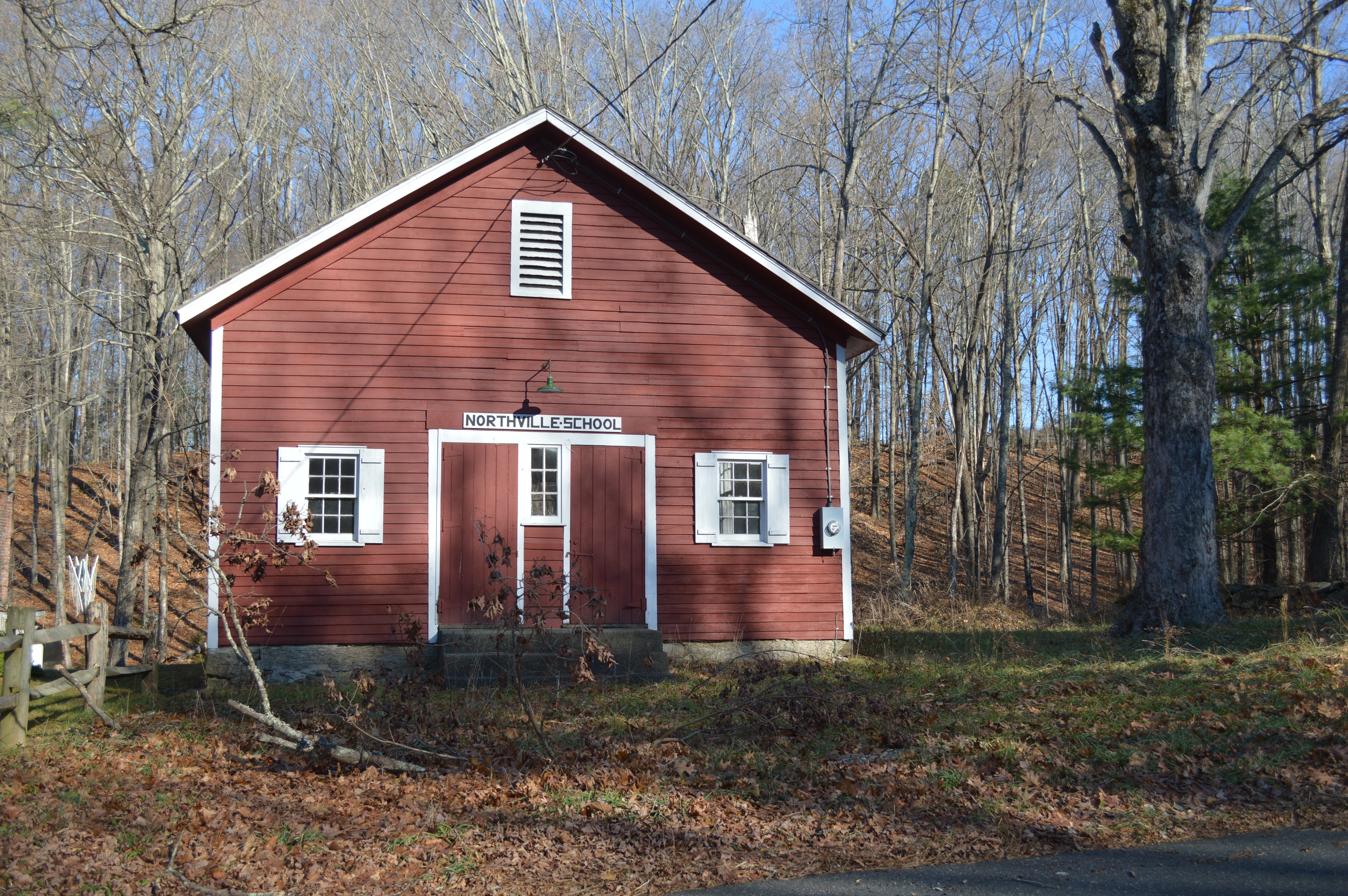
Northville’s one-room schoolhouse

That community was settled by Daniel Hine in 1750 and its first school was established in 1783. By 1825 it was a thriving settlement with Baptist and Methodist churches, two stores and a postmaster. It was also something of an industrial center as it boasted a wagon making operation, a grist mill, saw mills, a paper mill, a blacksmith, a cabinet shop and a lime kiln.

2013-11-29 12.24.31

Northville and its parent town grew over the years. By 1940, over 5,500 people lived in New Milford. Of these, 746 answered their country’s call for service during World War II. To honor the sacrifice of these men, Mr. and Mrs. Marcel Benevelli and the Northville Neighbors Club dedicated this tree as a living tribute.

2013-11-29 12.24.49

For years I have driven past this tree on my way to celebrate Christmas at my parents’ home in New Milford. In its sincerity and simplicity it has always seemed to capture the spirit of the season. To all of those who have taken the time to stop by this blog, a very happy holiday!

Hidden Nearby: Camp Columbia State Park in Morris

DSC_0194This post is the third in a partnership with the Litchfield.bz website.  Litchfield.bz is posting video tours of some of the sites visited by this blog.  To see our video tour of Camp Columbia, click here:  http://www.youtube.com/watch?v=65RY3vqdJ4Q

Camp Columbia State Forest stands as something as a ghost town along Route 109 in Morris.  For nearly 100 years – from 1885 to 1983 – Columbia University held engineering and surveying classes on the more than 500 acre campus, which at its peak occupied nearly one square mile from the shores of Bantam Lake to the Morris/Bethlehem town line.  Here, engineering breakthroughs such as the concrete roof that would later top Madison Square Garden were pioneered.
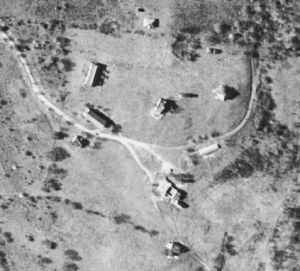
A 1934 aerial view of Camp Columbia.  Courtesy of the State of Connecticut.

A 1934 aerial view of Camp Columbia. Courtesy of the State of Connecticut.

Land purchases began in 1903.  Prior to this the university had rented land from Mrs. Everett Waugh.  Mrs. Waugh’s farm would become the heart of the property, which soon would feature dormitories, a YMCA building with billiards and ping pong tables, a mess hall, and an astronomical observatory.   Columbia paid $10,000 for the 1903 purchases.

trench

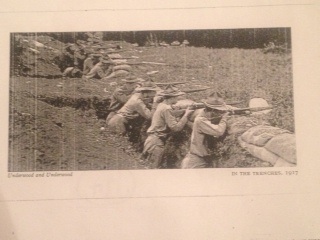
Officer candidates participating in a World War I training program held at Camp Columbia. Photo courtesy of Columbia University.

In the years prior to World War I, a boathouse was built on Bantam Lake.  Future expansion was halted by the coming of war, and in 1917, officers’ training for the United States Army took place on the property.  Trenches were dug near Munger Lane, and mock infantry assaults swept the camp.  In 1918, the university issued an informational packet for those interested in a second round of training at the camp, which stated that the purpose was to offer “an officers’ training course for men who may be called to the National Army and desire to fit themselves for officers of noncommissioned officers in Government Service.”  The packet stated that the program was conducted by the university, not the Army, but that  it had “the approval and endorsement of the Secretary of War, and the record of the men who attended last summer shows that the course has been effective in preparing men for officers’ rank, real usefulness, and rapid advancement.”

tower

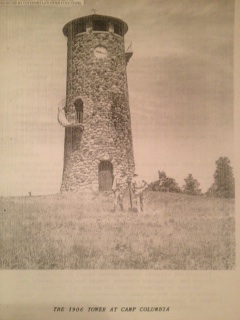
A 1940s image of the Camp Columbia tower; the tower is still standing but no longer has the hands on the clock. Photo courtesy of Columbia University.

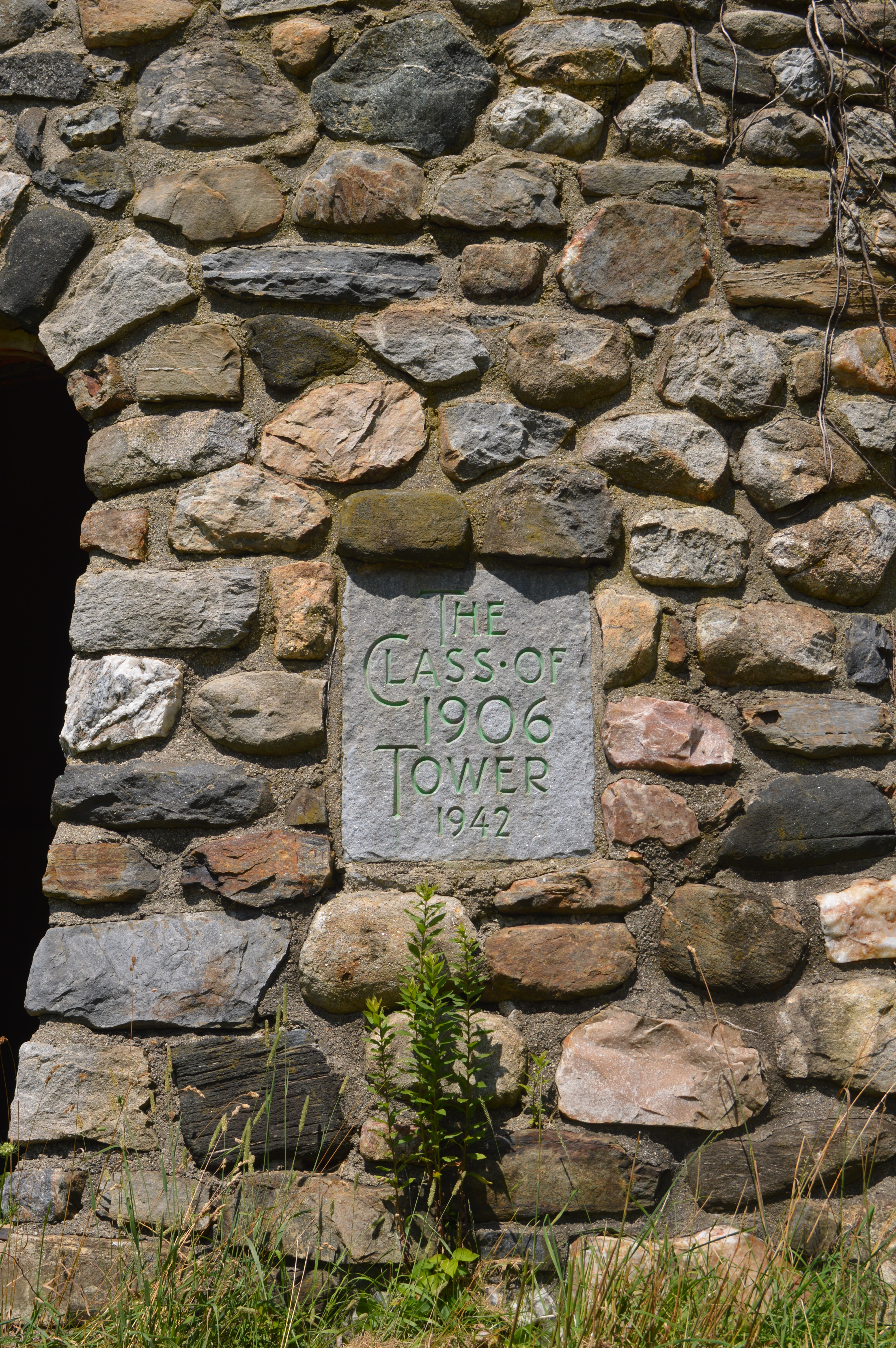
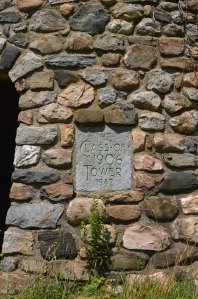
In 1934, a fieldstone dining hall was built and eight years later the central feature of the camp, a 60 foot cylindrical water tower with an observation platform made of local stone was presented to the camp by the Class of 1906.  A 1952 Columbia University press release describes the tower as a “land-locked lighthouse, or the battlement of a feudal castle.”

columbia-university-dwight-eisenhower-1948

Dwight Eisenhower as president of Columbia University.

 Columbia engineering students blasted and leveled the hilly terrain to create a softball field and football field.  In the late 1940s, the Columbia Lions football team held their early season practices here under Coach Lou Little, who paced the sidelines at the school for 26 seasons and was inducted into the College Football Hall of Fame in 1960.  Little was supported in his efforts by the then president of Columbia, Dwight D. Eisenhower.  Ike is reported to have spent time at the camp watching practices and hunting on the grounds.
DSC_0192

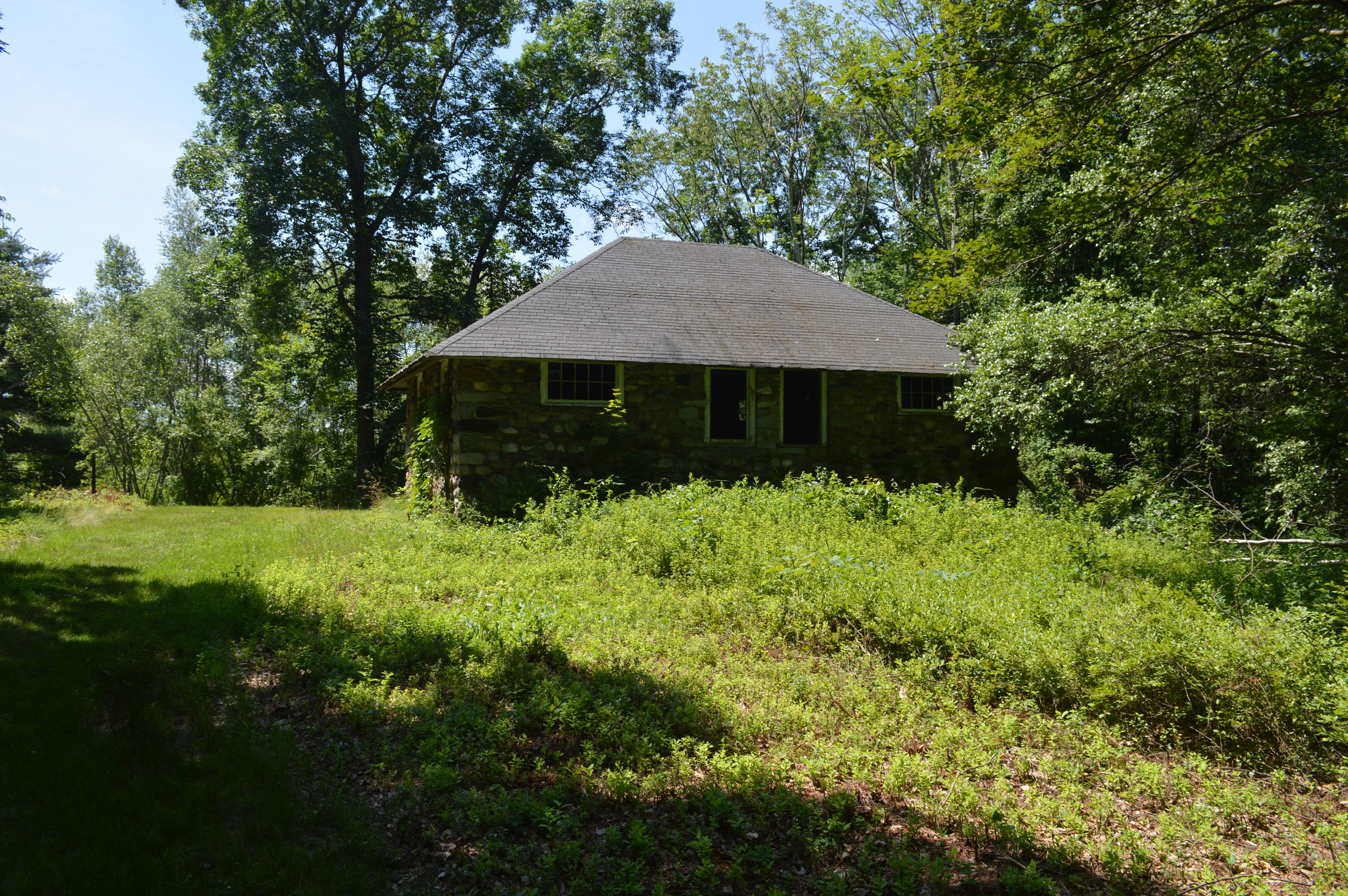
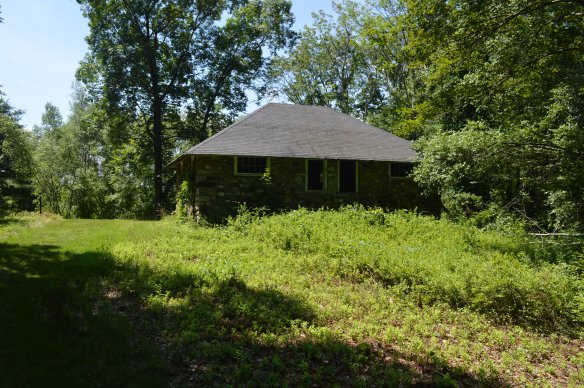
The Instrument House, one of two surviving structures.

Still, the primary purpose of the camp was as a field school for engineering students, and by the early 1950s the summer program was mandatory for these students.  Courses taught at the camp included Chemical Engineering, Civil Engineering, and Technology & International Affairs.  Additionally, the Columbia University American Language Center offered classes for those international students who wished to apply to American colleges.  The presence of the 60 or so international students in 1952 – from Korea, China, Japan, Malaya, Norway, Sweden, Colombia, Greece, Canada, Brazil, Engalnd and Italy – allowed the university to declare that the camp was “a veritable United Nations in microscosm, the youngsters live together and work together with no more friction than one would find in any other college class.”

Remains of the old flag circle at Camp Columbia.

Remains of the old flag circle at Camp Columbia.

By the mid-1960s, declining student interest in the camp experience and changes to the engineering curriculum brought an end to the Engineering Department’s use of Camp Columbia.  The university maintained the grounds for special programming until 1983 when it was closed.  While the university struggled to find a buyer for the property, the buildings slowly deteriorated.  In 1989, the Town of Morris declared several buildings to be a public hazard and they were utilized in a controlled burning training exercise.
DSC_0196

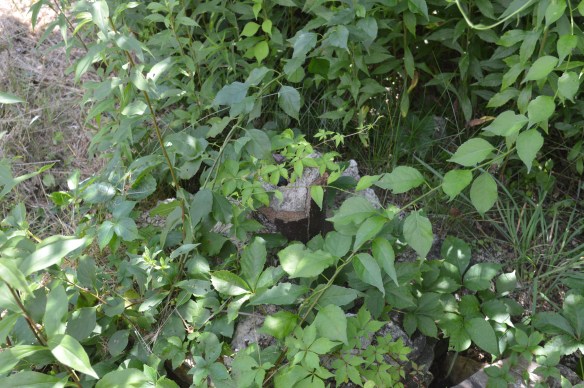
Remains of an old fountain at Camp Columbia.

In 2000, the State of Connecticut agreed to purchase the grounds for $2.1 million and began to remove most of the buildings.  Today, only the boathouse, tower and instrument house still stand.  Still, for the explorer willing to walk the grounds, hints of foundations and clearings in the forest provide a glimpse into what was once a thriving intellectual community.