Alain and May White Memorial Boulder

Here is among the most hidden in plain sight of Litchfield’s many monuments and markers.  How many hundreds, if not thousands, of hikers and bikers pass by this engraved boulder near the intersection of White Memorial’s Mattatuck and Beaver Pond trails without seeing it?

The boulder honors two of Litchfield’s most distinguished residents, Alain (1880-1951) and Margaret “May” (1869-1941) White.  Together they preserved nearly 9,000 acres of land that today comprise the White Memorial Foundation, Mohawk State Forest and Mohawk Mountain State Park, Kent Falls State Park, Macedonia Brook State Park, the People’s State Forest, Campbell Falls State Park, and portions of the Steep Rock Preserve.

The Whites were the children of John Jay White, a New York City real estate magnate who built Whitehall, a Victorian summer estate in Litchfield that today is the main building of the White Memorial Foundation.  Alain was educated as a botanist at Harvard in the era of Theodore Roosevelt’s presidency, a combination that may have led to his first impulses of conservation.  (It is interesting to note that White was a champion chess player, who is credited in some circles with breaking the German code in World War I, which was based upon a pattern of chess moves.)

Fishing the Bantam River with his friend William Mitchell Van Winkle in 1908, Alain commented “Wouldn’t it be wonderful to preserve this river, lake and countryside as we see it now?”  With his sister May he would devote nearly the next half century to acquiring additional lands for a preserve dedicated to the memory of their parents, including the Babbit farm along today’s Route 63, on which this boulder stands.

Their goal was not simply to allow nature to run its course on these lands, however; rather, they hoped to “make shoreline available for youth camps, simple vacation home and convalescent retreats” (Rachel Carley, Litchfield, p. 225).  This, then, was practical conservationism.  Nor were their philanthropic impulses limited to nature; Alain was deeply involved in the establishment of the Connecticut Junior Republic, and in fact collaborated with Cass Gilbert, the architect of New York’s famed Woolworth Building, on its design.  He also wrote a detailed history of Litchfield in 1920.

May was a Sunday school teacher and avid theater aficionado who began a series of children’s performances at Whitehall, and who worked to turn the Lakeside Hotel into a summer getaway for children from New York City, a forerunner of the Fresh Air Fund.
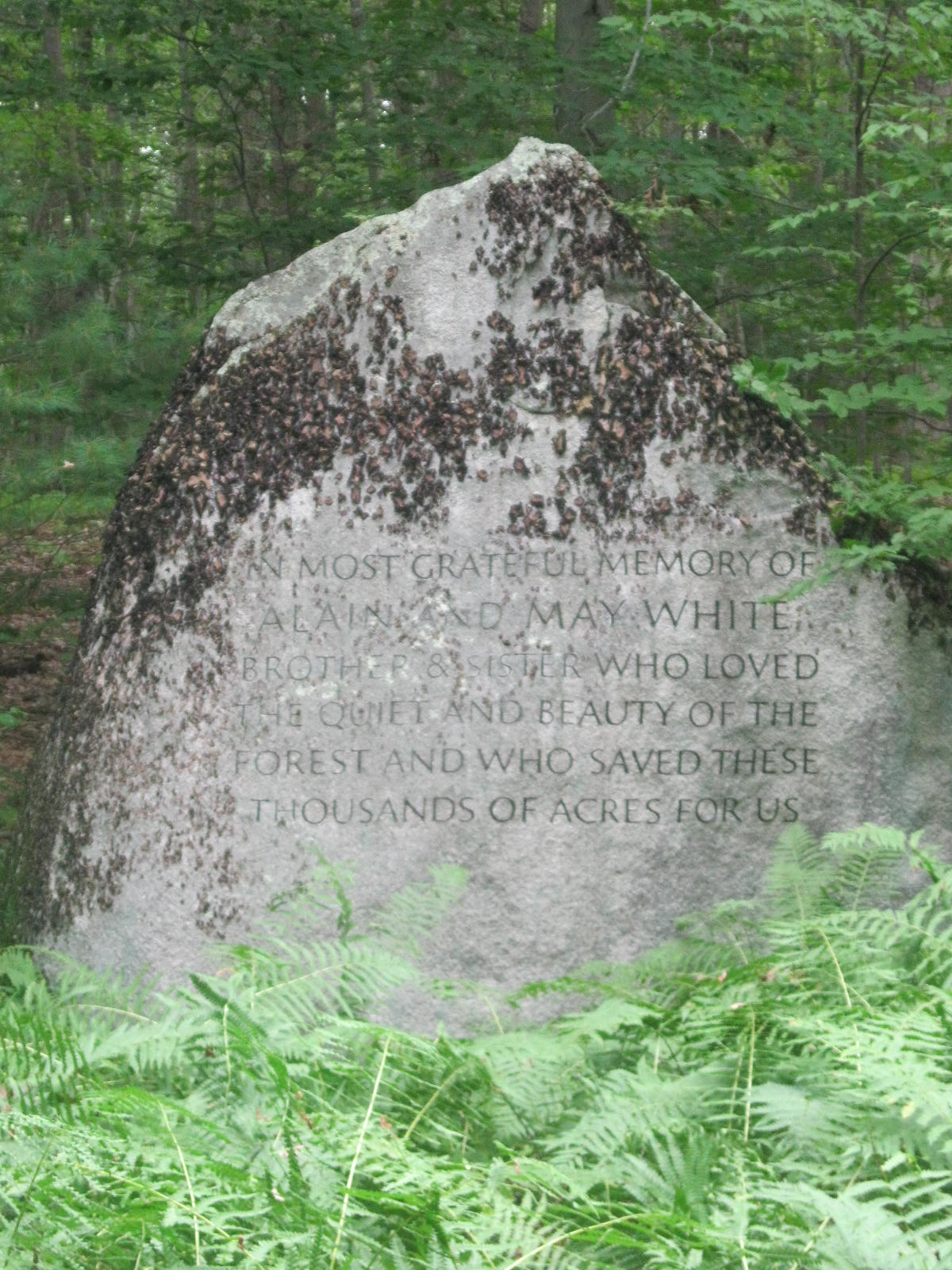

Still, they are rightly best remembered today for their remarkable contribution of a 4,000-acre backyard for Litchfield, a refuge not only for animals but for hikers, bikers and kayakers.  As real estate development infringes upon more and more open spaces, the words carved on the boulder are increasingly appropriate:

In most grateful memory of

ALAIN AND MAY WHITE

brother & sister who loved

the quiet and beauty of the

forest and who saved these

thousands of acres for us.

To find the monument, park in the small parking area near the intersections of Routes 63 and 61.  Walk east on the Beaver Pond Trail (white blazes) until the trail intersects with the Mattatuck Trail (blue blazes).  Follow the fork to the left, the Mattatuck Trail.  The monument will soon appear, set in the woods on your left.
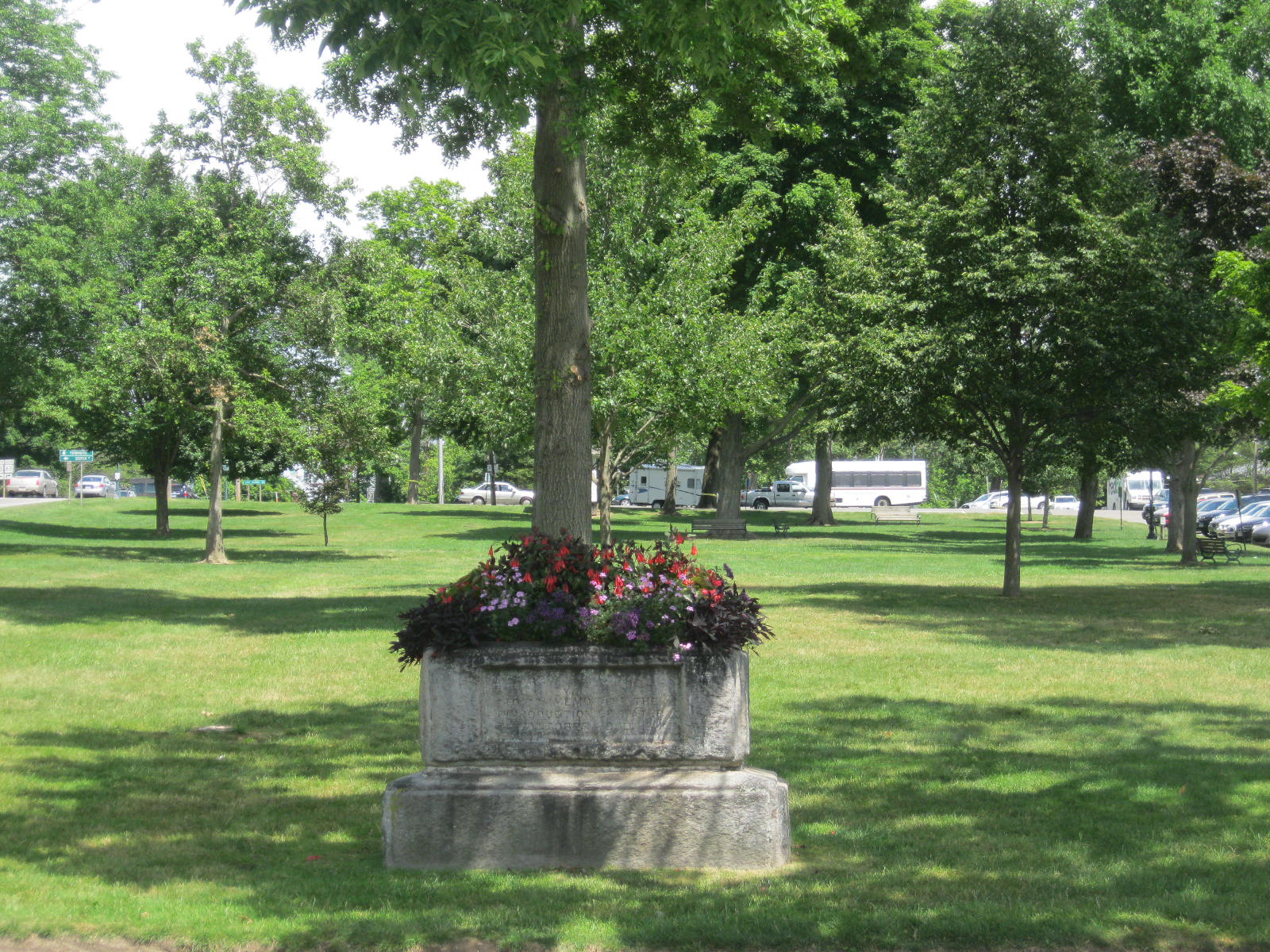
Litchfield’s Water Monument

Litchfield enjoyed a so-called “Golden Age” from 1784 to 1834.  In these fifty years the small town was a center of education -with both Tapping Reeve’s law school and the Sarah Pierce Academy bringing young, intelligent and often well-to-do men and women to town – and of commerce.  In 1810, the population of the town was approximately 4,600, making it, according to the Litchfield Historical Society (http://litchfieldhistoricalsociety.org/history/index.php), the fourth largest settlement in the state.

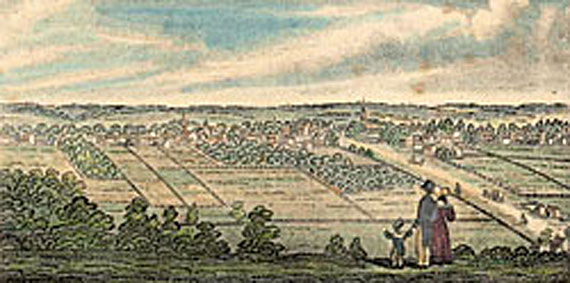
Litchfield, 1836

However, beginning with the United States’ Fourth Census in 1820, the number of residents in Litchfield began a steady decline, with the overall population dropping in nine of the next ten censuses.  By 1910, the town’s population stood at 3,005, a staggering drop of 35%.  There were many reasons for the exodus of Litchfield residents.  Across New England, populations fell in the aftermath of the American Revolution as farmers gave up their rocky lands for the promise of new lands in the west; the migration was so severe that editorials appeared in the Hartford Courant asking who would tend to the graveyards of Litchfield County in the aftermath of the departure of so many residents.  The drop in Litchfield’s population was due to perhaps a simpler cause – it was very difficult for those who lived in town to obtain an adequate supply of water.

Litchfield was first laid out along elevated lands, initially along the ridge marked by present-day North and South Streets, then spreading to the Chestnut Hill area. While this allowed for plots away from swamps and wetlands, it made for great difficulty in digging wells.  A solution to the town’s water problem would be arrived at only with great difficulty and after decades of planning and work.

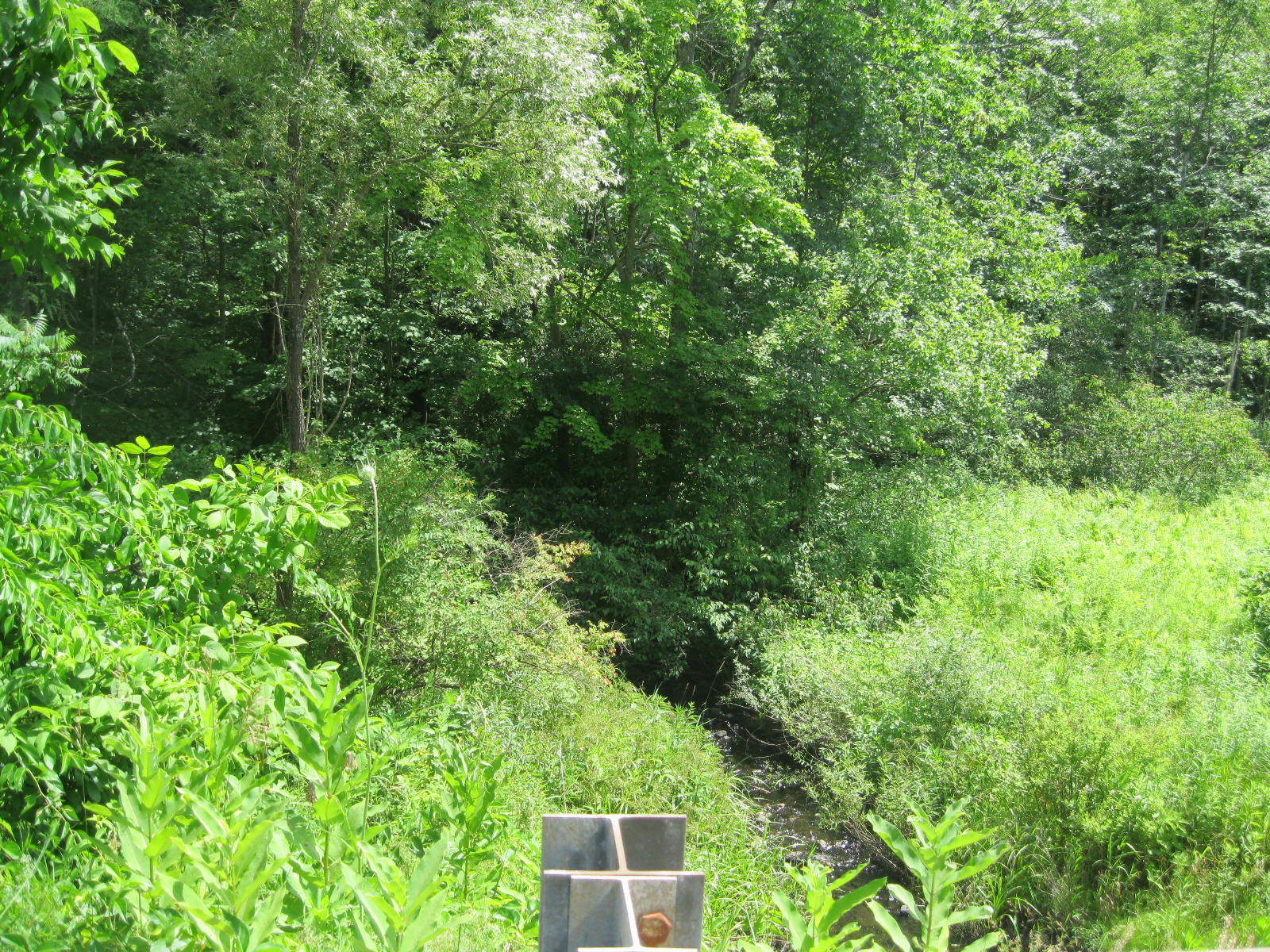
Fox Brook, Goshen

After discussions of how to solve the water crisis – and the continued decline in the town’s population – the Litchfield Water Company was established in 1891.  The company proposed damming Fox Brook in Goshen to create a reservoir.  While water was brought to Litchfield in 1891, within a few years the source was proven to be inadequate, for it was later written that Fox Brook “could not properly be called a brook, as it practically dried up soon after a rainfall.”

Professor Henry S. Munroe, of Columbia University’s Department of Mining was brought in to solve the problem.  Munroe, whose other contributions to the Litchfield County landscape included the tower on Mount Tom, oversaw the construction of a new pumping plan in the valley below the reservoir, with wells 90 feet deep.  These wells, as Alain White wrote in his history of Litchfield,

“have provided an unfailing supply of pure water ever since, so that however dry the season or how near a water famine many of the surrounding towns were, Litchfield people … had no cause for worry.”

The Litchfield Water Company soon after purchased 500 acres of the surrounding watershed of the reservoir, which they allowed to return to a natural forested state – excepting, that is, the fences they erected to keep out cattle.  Filters were added to the pumps in 1914 to help ensure the purity of the water supply.

Apparently the mere prospect of a clean and secure source of drinking water excited the commemorative spirit of the town.  In 1890, a year before the water system was activated, a small monument appeared on the western end of the town green bearing the inscription:

Erected by the

VIS

to commemorate the

introduction of water

October 1890.

The Litchfield Village Improvement Company (later the Village Improvement Society, or VIS) was incorporated in 1875 to oversee improvements to the town’s streets, parks, and public structures.  In erecting this particular marker, however, the organization perhaps did more than improve the appearance of their town; they may have commemorated its very survival.